
Nigeria’s Leadership in the Rabat Process (2025–2026):
An Institutional Analysis of the Role of the Federal Commissioner/CEO of NCFRMI under Hon. Dr. Tijani Aliyu Ahmed
By Amb. Valentine Opaluwa Ejeh PhD. Peace and Conflict Scholar based in Abuja
Abstract
Nigeria’s chairmanship of the Euro-African Dialogue on Migration and Development (the Rabat Process) marked a significant moment in Africa–Europe migration governance.
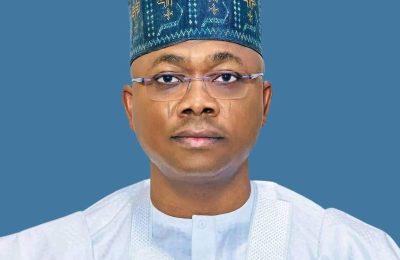
This article analyses the leadership role of the Federal Commissioner/Chief Executive Officer of the National Commission for Refugees, Migrants and Internally Displaced Persons (NCFRMI), Hon. Dr. Tijani Aliyu Ahmed, during Nigeria’s tenure.
It examines how his institutional leadership shaped thematic priorities—particularly climate-induced mobility, migration data governance, protection frameworks, and youth-centred migration discourse—while situating these efforts within Nigeria’s broader humanitarian governance architecture under the supervision of the Federal Ministry of Humanitarian Affairs and Poverty Reduction, currently led by Dr. M. Doro.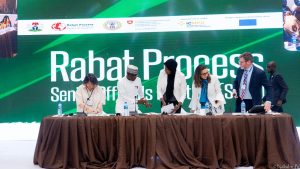
1. Introduction: The Rabat Process and Nigeria’s Chairmanship
The Rabat Process is a long-standing Euro-African intergovernmental dialogue established in 2006 to promote cooperation on migration, mobility, development, and protection between African and European states. Operating under multi-year action plans—most recently the Cadiz Action Plan (2023–2027)—the Process provides a non-binding but influential platform for policy coordination, norm-setting, and trust-building.
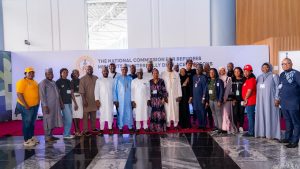
Nigeria’s assumption of the chairmanship (2025–2026) represented a symbolic and strategic milestone, as it was among the first times a large Anglophone West African state played such a central steering role. At the operational and institutional level, this leadership was exercised primarily through the Federal Commissioner/CEO of NCFRMI, Hon. Dr. Tijani Aliyu Ahmed, whose office served as the technical and diplomatic anchor for Nigeria’s engagement.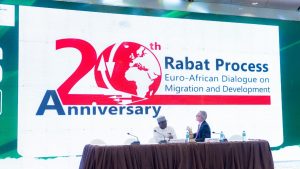
2. Institutional Mandate of NCFRMI within the Rabat Process
NCFRMI is Nigeria’s statutory body responsible for refugees, asylum seekers, migrants, internally displaced persons (IDPs), returnees, and stateless persons. Its mandate places it at the intersection of humanitarian response, migration governance, and protection policy—the same thematic pillars underpinning the Rabat Process.
As chair, Nigeria did not merely occupy a ceremonial role; rather, it was responsible for:
Steering thematic priorities and meetings,
Facilitating dialogue among African and European partners,
Advancing consensus around emerging migration challenges,
Ensuring continuity with the Cadiz Action Plan while introducing context-specific perspectives.
Dr. Tijani Aliyu Ahmed’s leadership thus translated NCFRMI’s domestic mandate into multilateral migration diplomacy, positioning the Commission as a credible bridge between national realities and international policy discourse.
3. Leadership of Hon. Dr. Tijani Aliyu Ahmed: Core Contributions
3.1 Strategic Reframing of Migration Governance
Under Dr. Ahmed’s leadership, Nigeria’s chairmanship contributed to a broadening of the Rabat Process agenda. Migration was framed not solely as a border-control or irregular-movement issue, but as a phenomenon shaped by:
Climate change and environmental degradation,
Demographic pressures and youth unemployment,
Fragility, conflict, and uneven development.
This reframing aligned with global shifts toward human-centred and development-oriented migration governance, while amplifying African perspectives often underrepresented in Euro-centric policy debates.
3.2 Climate Change and Climate-Induced Mobility
A defining feature of Nigeria’s chairmanship was the elevation of climate change as a structural driver of displacement and mobility. Drawing from Nigeria’s own experience with flooding, desertification, and resource-based conflicts, Dr. Ahmed advanced climate-induced mobility as:
A protection concern,
A development challenge,
A governance issue requiring anticipatory, rather than reactive, responses.
Within Rabat Process discussions, this emphasis helped link environmental policy, humanitarian action, and migration management—moving the dialogue closer to integrated policy thinking.
3.3 Migration Data and Evidence-Based Policymaking
Another central contribution was the prioritisation of migration data governance. Dr. Ahmed consistently underscored the importance of:
Reliable, disaggregated migration data,
Cross-border information sharing,
Evidence-based decision-making to counter misinformation and policy fragmentation.
This focus resonated with the Rabat Process’s broader objective of strengthening state capacity and improving policy coherence across regions with diverse institutional capabilities.
3.4 Youth, Innovation, and the Future of Mobility
Nigeria’s leadership also foregrounded youth and innovation as both drivers and solutions within migration dynamics. Under Dr. Ahmed’s stewardship, thematic engagements highlighted:
Youth as active agents rather than passive migrants,
Innovation, skills development, and education as tools for reducing forced and irregular migration,
The need to align migration governance with long-term demographic realities in Africa.
This approach reinforced the development pillar of the Rabat Process and offered a forward-looking narrative beyond crisis management.
4. Relationship with the Federal Ministry of Humanitarian Affairs and Poverty Reduction
While Dr. Tijani Aliyu Ahmed served as the principal technical lead for Nigeria’s Rabat Process chairmanship, NCFRMI operates under the supervisory framework of the Federal Ministry of Humanitarian Affairs and Poverty Reduction.
The appointment of Dr. M. (Bernard Mohammed) Doro as Minister during the latter phase of Nigeria’s tenure provided institutional continuity and political backing for NCFRMI’s international engagement. Although the Ministry did not directly steer Rabat Process deliberations, its role was significant in:
Providing policy oversight for NCFRMI,
Aligning international commitments with domestic humanitarian and poverty-reduction priorities,
Reinforcing the humanitarian dimensions of migration governance.
Dr. Doro’s technocratic and reform-oriented posture—emphasizing transparency, coordination, and systems strengthening—complemented Dr. Ahmed’s data-driven and protection-focused leadership at the multilateral level.
5. Scholarly Assessment and Implications
From an analytical perspective, the leadership of Hon. Dr. Tijani Aliyu Ahmed during Nigeria’s Rabat Process chairmanship demonstrates:
Institutional Agency: How a national commission can shape international dialogue when empowered with technical credibility and diplomatic clarity.
Norm Entrepreneurship: Nigeria’s contribution to mainstreaming climate-induced mobility within Euro-African migration discourse.
Policy Coherence: The importance of alignment between multilateral engagement (NCFRMI) and domestic humanitarian governance (Ministry of Humanitarian Affairs).
Continuity amid Transition: Despite leadership changes at ministerial level, the chairmanship maintained thematic consistency, reflecting institutional rather than personality-driven governance.
6. Conclusion
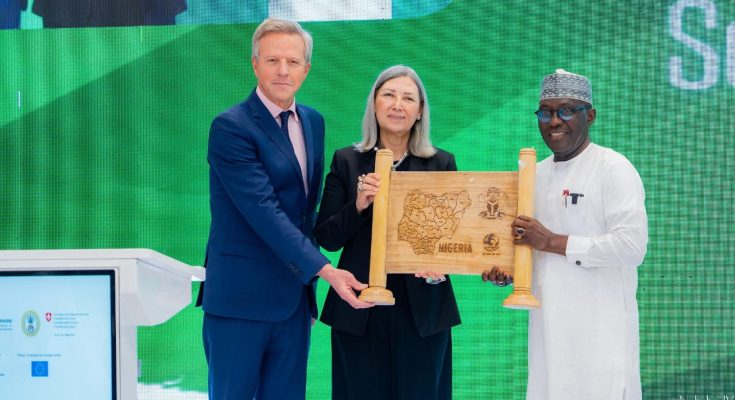
Nigeria’s tenure as Chair of the Rabat Process illustrates the growing influence of African state institutions in shaping global migration governance. At the centre of this leadership was Hon. Dr. Tijani Aliyu Ahmed, whose stewardship of NCFRMI translated domestic protection experience into meaningful multilateral engagement. With contextual support from the Federal Ministry of Humanitarian Affairs and Poverty Reduction, now led by Dr. M. Doro, Nigeria’s chairmanship contributed to a more inclusive, climate-aware, and evidence-driven migration dialogue. As the chairmanship transitions to Switzerland, Nigeria’s legacy remains visible in the expanded thematic scope and strengthened normative orientation of the Rabat Process.