





By Jonathan Jibrin.
The recent communal clashes in parts of Kogi East have left families displaced, livelihoods disrupted and many people facing an uncertain future. For the Igala Cultural and Development Association (ICDA), it was not enough to hear about their difficulties from a distance. The Association felt the need to go to them.
On Saturday, 26 September and Sunday, 27 September 2026, members of the ICDA Executive Council travelled to some of the affected communities to see the situation firsthand, listen to the people and offer whatever assistance the Association could provide.
The delegation visited Ebeje/Erabo, Edede, in Dekina Local Government Area, where they met with victims and displaced persons and presented cash relief to help ease some of the immediate difficulties caused by the crisis.
Reaching some of these communities was itself a difficult journey.
The terrain is highly inaccessible, with poor road access making movement particularly challenging. Many of the communities also have little or no mobile network coverage, making communication with people in the area difficult.
At some points, the delegation had to leave their vehicles behind and resort to motorcycles to reach some of the communities, travelling together with the military personnel providing security for the mission.
It was not the easiest journey.
But the difficult terrain, the absence of network coverage and the challenges of movement could not be allowed to become a reason not to reach people who were already going through difficult times.
In a sense, the journey itself became part of the message.
If our people could remain in those difficult places, ICDA could make the effort to reach them.
The delegation eventually made its way into the communities, where it met families whose lives had been disrupted by the crisis.
There were no grand ceremonies. There was simply the human encounter — people sitting with people, listening to their stories, sharing in their concerns and offering a helping hand.
Sometimes, what people need most in a difficult moment is to know that somebody remembers them.
During the journey, the delegation also met with military personnel stationed at Odu Apkelu, who are keeping the peace in the area.
The officers and men provided security cover and escorted the ICDA delegation to the communities visited in Dekina.
Their presence was particularly important given the difficult terrain and the security situation in some of the areas.
ICDA was touched by the commitment of these personnel, many of whom are stationed in remote communities, away from the conveniences of the cities, performing the difficult duty of protecting lives and maintaining peace.
The Association commends them for their dedication and sacrifice.
They too deserve to be remembered.
ICDA therefore calls on Government, organisations and well-meaning individuals to give greater attention to the welfare, logistics and working conditions of security personnel deployed to such remote locations.
Those who stand between communities and insecurity must themselves be adequately supported.
Meeting the Displaced from Ibaji
The delegation had planned to travel to Ishi in Ibaji Local Government Area, but circumstances did not allow the team to reach the community.
The ICDA delegation, however, did not want the people of Ibaji to be left out of the outreach.
On Sunday, 27 September, the team met with some of the displaced persons from Ibaji who had taken refuge in Idah, at the popular Ibaji Quarters. Relief was presented to them, and the delegation listened to some of their experiences.
Their presence in Idah was a painful reminder of what communal conflict can do to ordinary people — forcing families away from their homes and communities in search of safety.
ICDA’s message to them was simple:
You have not been forgotten.
The People Who Made the Outreach Possible
The intervention was made possible by the generosity of well-meaning Igala sons and daughters who responded to ICDA’s appeal and donated towards the programme.
The Association sincerely appreciates every person who contributed.
Their donations were more than financial contributions. They were expressions of concern for fellow Igala people going through difficult circumstances.
At a time when it would have been easy to look away, they chose to help.
ICDA is grateful for that spirit of brotherhood.
The experience of the past few days has reminded the ICDA Executive Council that its responsibility to the Igala people goes beyond cultural activities, meetings and advocacy.
A people are defined not only by their history and culture, but also by how they respond when one of their own is in difficulty.
ICDA believes that the welfare and unity of our people must remain at the heart of our collective responsibility.
The cash assistance provided during the outreach cannot replace what families may have lost, nor can it immediately solve the problems created by displacement. But it is a gesture of solidarity — a way of saying that the burden of one part of our people is a concern to all of us.
The Association also believes that lasting peace is essential for the progress of our communities and encourages continued efforts towards peace, reconciliation and peaceful coexistence.
The ICDA Executive Council is grateful to the affected communities for receiving the delegation, to the generous donors who made the outreach possible, and to the military personnel who provided security and made it possible for the team to reach some of the difficult-to-access communities.
The journey may have taken the delegation through rough roads, difficult terrain, places without telephone networks and, at some points, motorcycle tracks where vehicles could no longer pass.
But it also brought the Association closer to the people it exists to serve.
And perhaps that is the most important lesson from the journey:
When our people hurt, we must care.
When they are displaced, we must reach out.
When the road is difficult, we must still find a way to get to them.
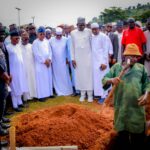
(Attached are some pictures taken during the visit)
Sometimes, leadership is simply the willingness to go where your people are hurting.
Jonathan Jibrin
Director Media and publicity ,
Igala Cultural and Development Association (ICDA)