



By Muhammed NA, Abuja
For decades, the Uko River stood as a painful barrier to economic activities, social interaction and development across communities around the Aji-Ofu and Aji-Alu confluence. What should have been a simple journey across the river became a daily struggle for residents, traders, farmers and commuters.
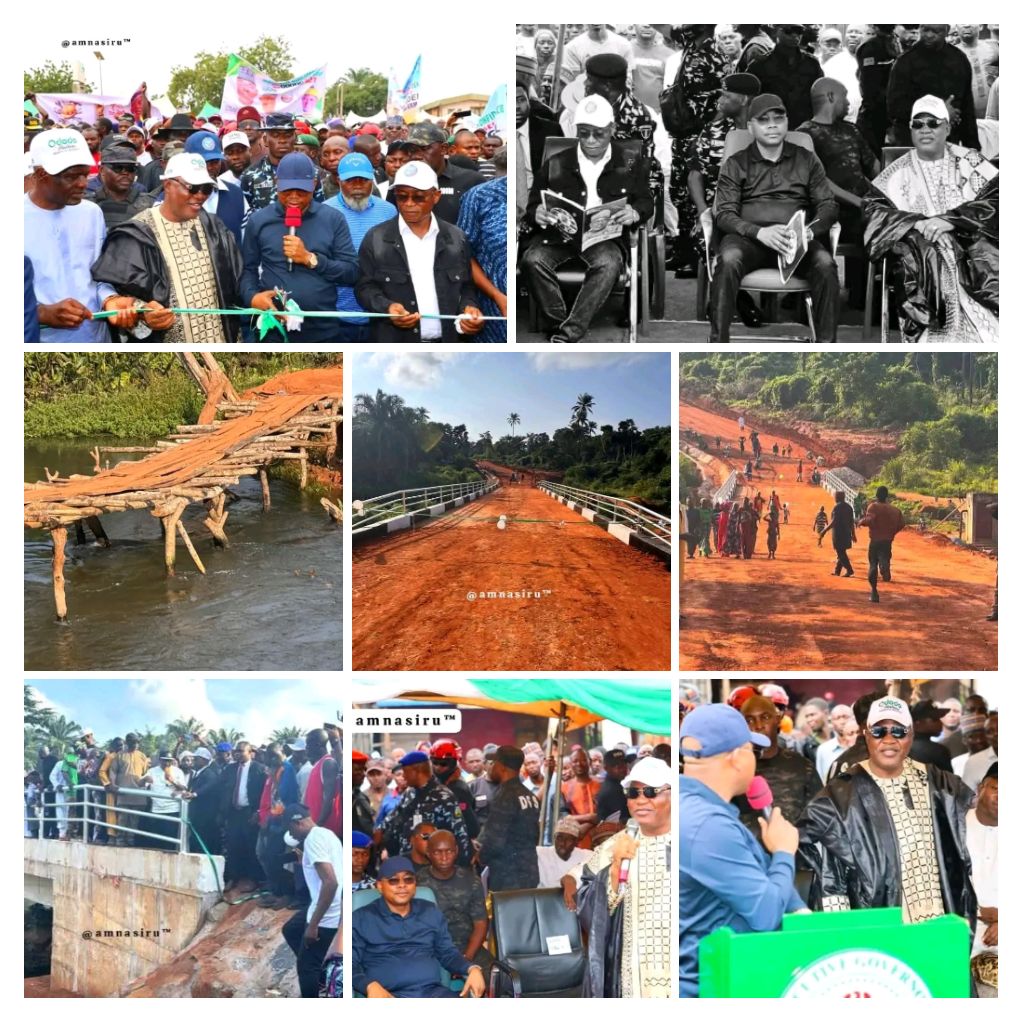
The old Uko Bridge, weakened by years of neglect, had become a dangerous structure of decaying wooden planks, unstable supports and broken sections. Crossing it was a gamble many residents could no longer afford to take.
For Amina, a trader from Biraidu community, the experience was particularly difficult. Every market day, transporting her baskets of corn and cassava meant either negotiating a risky passage on a wooden raft or taking the longer route through Ankpa township at an additional cost.
She was not alone. Countless residents shared the same burden. When rising waters eventually swept away a major section of the old bridge, the consequences were devastating. Transportation costs increased, businesses suffered, and the once-vibrant commercial connections among Okpo, Uko, Ojokodo and Ojelanyi communities gradually weakened.
For years, the bridge became a familiar subject of political campaigns. Politicians visited, made promises and departed, leaving residents with little more than renewed expectations and the same old hardship
Unlike the familiar cycle of political promises, Halims approached the challenge with determination and a clear commitment to deliver.
His initial visit was accompanied by key stakeholders, including the then Executive Chairman of Olamaboro Local Government Area, Hon. Nichodemus Adejoh Pexy; the then Commissioner for Commerce and Industry, Hon. Yunusa Olofu, popularly known as Bumper2Bumper; as well as engineers and surveyors.
The visit was not without its defining moment. While inspecting the deplorable condition of the bridge, Halims reportedly fell into the river after stepping on a rotten plank. The incident brought home, in the most practical way, the danger residents faced daily.
Rather than walk away from the challenge, he turned the experience into a stronger resolve to provide a lasting solution.
Eighteen Months of Work, A Lifetime of Impact.
For approximately eighteen months, construction activities continued at the site. The old wooden structure gradually gave way to a modern bridge constructed with reinforced concrete and steel.
Behind the scenes, Halims maintained close contact with the project team, making repeated telephone calls to monitor progress and obtain updates. His approach, according to the account of the project, was less about publicity and more about ensuring that the work was completed.
The result was a new Uko Bridge — a major infrastructure intervention designed to reconnect communities, improve transportation and revive economic activities across the area.
In July 2025, the Executive Governor of Kogi State commissioned the bridge in a historic ceremony in Ankpa, marking a significant moment for the benefiting communities.
For residents who had endured years of transportation difficulties, the commissioning represented more than the completion of an infrastructure project. It was the fulfilment of a long-awaited promise.
The real significance of the bridge, however, was best captured by the people whose daily lives it transformed.
No longer would traders depend on risky wooden rafts or endure expensive alternative routes. No longer would residents have to organise their daily activities around the limitations imposed by the river.
Journeys that once took hours could now be completed in minutes, with the new crossing reducing what had been a day-long ordeal to approximately ten minutes.
Markets could reconnect, farmers could move their produce more easily, and communities previously separated by the river could interact with greater convenience.
Beyond Concrete and Steel: A Legacy of Service.
Today, the Uko Bridge stands as a symbol of renewed connectivity, economic opportunity and responsive representation.
Its importance goes beyond its physical structure. It represents what purposeful leadership can achieve when public commitments are translated into tangible projects that directly affect people’s lives.
For the communities of Olamaboro and neighbouring areas, the bridge is a daily reminder that infrastructure is not merely about roads, steel and concrete; it is about people, livelihoods, opportunities and dignity.
Rt. Hon. Halims has, through this intervention, demonstrated that leadership should be measured not merely by speeches and political declarations but by the lasting impact of service.
The Uko Bridge is therefore more than another completed project. It is a promise kept, a connection restored and a legacy that will continue to serve generations long after its facilitator has left the political stage.
Indeed, some leaders make promises. Others build legacies.
HALIMS SEASON 3: OYOYO!!!