

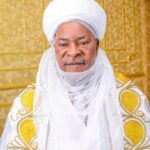








Holds security summit
Kogi State Governor, Alhaji Ahmed Usman Ododo, has charged the management of tertiary institutions across the state to prioritise campus security, warning that education cannot thrive in an atmosphere of fear and insecurity.
The governor gave the charge on Tuesday at the maiden Kogi State Annual Security Summit for Higher Institutions, held at the Government House Banquet Hall, Lokoja, with the theme: *”Strengthening Campus Security Architecture in Kogi State: Towards a Unified Policy Framework for Safe and Secure Tertiary Institutions.
Ododo, who was represented at the event, stressed that the safety of students, lecturers, non-academic staff and other members of the academic community must remain a collective responsibility of government, institutional authorities, security agencies, students and host communities.
He said higher institutions should be safe environments where students could pursue their academic ambitions, develop their talents and prepare for the future without fear.
According to him, parents entrust their children to educational institutions with the expectation that they will be protected, adding that such confidence must not be taken for granted.
The governor described security as the foundation of development and reaffirmed his administration’s commitment to protecting lives and property through stronger collaboration among security agencies.
He particularly called for increased vigilance around campuses, student hostels, access roads and surrounding communities, warning that such locations must not become easy targets for criminal elements.
Recalling the kidnapping of students of Confluence University of Science and Technology (CUSTECH), Osara, Ododo said the incident underscored the need for institutions to strengthen their capacity to identify threats early, share intelligence and respond promptly to emergencies.
He urged heads of security units to go beyond routine access control by maintaining effective surveillance of their environments, collaborating with relevant security agencies and promptly reporting suspicious activities.
The governor also called on students to support security efforts by remaining vigilant, providing useful information and avoiding activities capable of endangering themselves and others.
He further urged security agencies and host communities to establish stronger working relationships with institutional authorities to address emerging security challenges.
Ododo said the summit must produce practical recommendations on intelligence sharing, emergency response, access control, student safety, cultism, drug abuse, cyber-related threats, irregular migration and proper verification of foreign students.
He maintained that every student represents someone’s child and that parents deserve the assurance that their children are safe while pursuing their education.
Earlier, the State Security Adviser, Cdr. Duro Jerry Omodara (Rtd), said the summit was designed to promote collective responsibility and establish a coordinated approach to security management across tertiary institutions in the state.
Omodara, who described campus security as both an official and personal concern, recalled his involvement in the security operations that led to the rescue of kidnapped students of CUSTECH, Osara.
He said the experience reinforced his conviction that security authorities must not wait for incidents to occur before identifying weaknesses and taking preventive measures.
According to him, the protection of students goes beyond security reports and official briefings, as every incident affects families, academic communities and the future of young people.
He emphasised the need to strengthen security around campuses, hostels, access roads and surrounding communities, noting that the responsibility must be shared by institutional management, lecturers, students, parents, host communities and security personnel.
In his welcome address, the Head of Security Unit, Kogi State University, Kabba, Dr. Pst. Samuel Olubato, said the summit was conceived to address the growing security concerns confronting tertiary institutions through a unified state-level policy framework.
He identified cultism, drug abuse and trafficking, sexual and gender-based violence, theft, student unrest, kidnapping, cyber-related threats, unauthorised access and examination-related violence as some of the challenges requiring urgent attention.
Olubato warned that security challenges in one institution could have wider implications for other institutions and the overall security of the state.
He said the summit was expected to assess existing security structures, identify operational gaps, strengthen collaboration between institutional security units and agencies such as the Police, DSS, NSCDC, NDLEA and Immigration Service, as well as improve intelligence gathering and early-warning mechanisms.
Other expected outcomes include capacity building for chief security officers, the development of common standards for security reporting and emergency response, and the production of a draft Kogi State Campus Security Policy Framework alongside a communiqué containing actionable recommendations.
He urged heads of security units to participate actively in the deliberations, share their experiences and take ownership of the proposed framework to ensure that its recommendations translate into measurable improvements.
Olubato expressed appreciation to Governor Ododo, the State Security Adviser, the Commissioner for Education and the Vice-Chancellor of Kogi State University, Kabba, Prof. K.I.T. Eniola, for their support towards the initiative.
The two-day summit is expected to provide a platform for government officials, tertiary institution administrators, security agencies, student representatives and other stakeholders to develop a coordinated and sustainable approach to campus safety across Kogi State.