




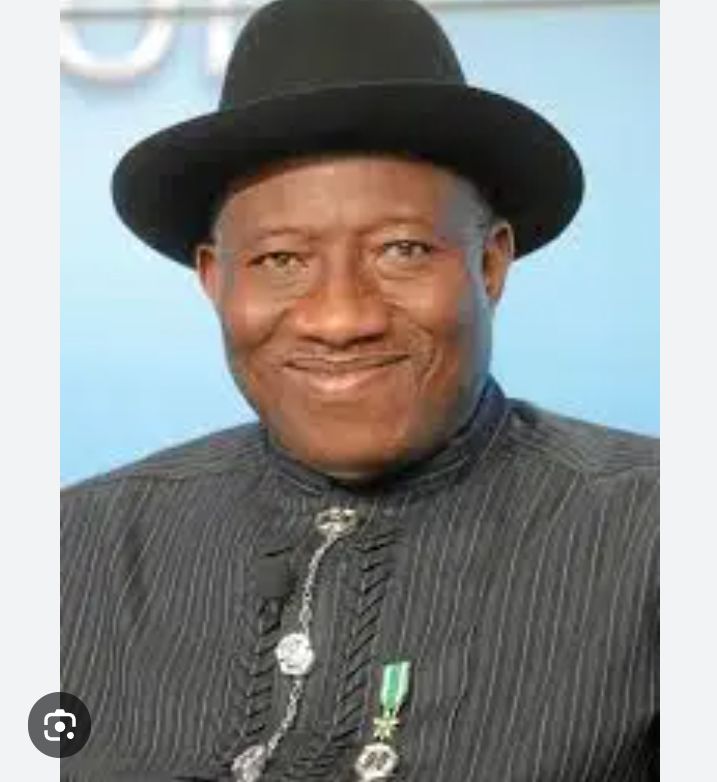
*PRESIDENT JONATHAN AND THE TROJAN HORSE GIFT: THE PDP PRESIDENTIAL TICKET*
*By Aduojo J. Agi, Ph.D.*
Politics across the world is fundamentally a game of numbers, influence, strategy, power, alliances, and financial strength. Yet, beyond all political calculations, fate and circumstance sometimes elevate certain individuals into positions of extraordinary authority. Such was largely the political journey of former President Goodluck Ebele Jonathan from 1999 to 2015.
Dr. Goodluck Jonathan’s rise to power remains one of the most remarkable political ascensions in Nigeria’s democratic history. Unlike many political leaders who spend decades navigating the rugged terrain of political conspiracies, betrayals, power struggles, manipulations, and electoral warfare, Jonathan’s journey to the Presidency appeared largely shaped by destiny.
In 1999, he was selected as the running mate to Chief Diepreye Solomon Peter Alamieyeseigha (DSP Alamieyeseigha), who at the time was a powerful political force and the gubernatorial candidate of the Peoples Democratic Party (PDP) in Bayelsa State. Following their electoral victory, Alamieyeseigha became Governor while Jonathan assumed office as Deputy Governor.
Fate smiled on Jonathan once again in 2005 when Governor Alamieyeseigha became politically vulnerable under the administration of President Olusegun Obasanjo, partly due to his perceived alliance with Vice President Atiku Abubakar during a tense period of internal political rivalry within the PDP. Following Alamieyeseigha’s removal from office, Jonathan constitutionally succeeded him as Executive Governor of Bayelsa State.
Again, destiny elevated him further in 2007 when he was selected as the running mate to the PDP Presidential Candidate, Umaru Musa Yar’Adua. Following the PDP’s victory in the general elections, Jonathan became Vice President of the Federal Republic of Nigeria.
Barely two years into office, President Yar’Adua, who had long battled health challenges, passed away in 2010. By constitutional succession, Jonathan emerged as President and Commander-in-Chief of the Armed Forces of the Federal Republic of Nigeria.
From Deputy Governor to Governor, from Vice President to President, Jonathan’s political rise was extraordinary because it largely occurred without him enduring the brutal and often unforgiving political battles that many Nigerian politicians face before attaining power. He was, in many respects, a beneficiary of circumstance, timing, and destiny.
However, the 2015 Presidential election marked the first major political battlefield where Jonathan personally confronted the full weight of Nigeria’s complex electoral realities. For the first time, he had to directly engage in the intense political intrigues, strategic alliances, propaganda wars, defections, betrayals, regional calculations, and coordinated opposition machinery that define modern Nigerian politics.
Standing against him was General Muhammadu Buhari, a formidable political figure with a deeply loyal support base. Buhari was further strengthened by some of Nigeria’s most influential political gladiators at the time, including Bola Ahmed Tinubu, Atiku Abubakar, Rotimi Amaechi, Nasir El-Rufai, and several others who united under the newly formed All Progressives Congress (APC).
Despite being the incumbent President with enormous institutional advantages, political structures, financial resources, and state influence, Jonathan lost the 2015 election. More significantly, he conceded defeat without a prolonged political confrontation, a move that earned him International praise for promoting democratic stability in Africa.
Nevertheless, many political observers continue to debate whether Jonathan and the PDP underestimated the seriousness of the opposition coalition that eventually removed them from power. Some critics argue that Jonathan never truly appreciated the immense political value and strategic complexity of the Nigerian Presidency because power came to him relatively easily compared to many of his contemporaries.
To many Nigerians, the 2015 defeat of the PDP represented more than just a transfer of political power. For some, it symbolized the beginning of a prolonged period of economic hardship, insecurity, rising inflation, social frustrations, and political instability that many citizens associate with successive APC administrations.
Ironically, the same political establishment that successfully displaced the PDP in 2015 is now reportedly considering former President Jonathan as a possible consensus Presidential Candidate ahead of the 2027 elections. This unfolding political development raises several important questions.
How would such a candidacy benefit either the PDP or Jonathan politically? Can a political structure that failed to retain power in 2015—despite controlling the federal government and most state institutions at the time—successfully reclaim power against the present-day APC political machinery under President Bola Ahmed Tinubu?
The political realities of today are significantly different from those of 2015. Many of the founding fathers, financiers, strategists, and power brokers of the PDP are either deceased, politically weakened, retired, or now aligned with rival political parties. Internal crises have also severely damaged the opposition structure. The activities and influence of figures such as the current Minister of the Federal Capital Territory, Nyesom Wike, have further exposed the deep fractures within the PDP.
From another perspective, the Intended adoption of Jonathan as a consensus candidate by forces linked to the ruling establishment could even be interpreted by some analysts as an indirect political endorsement of the APC’s continued dominance.
Nigeria’s opposition politics has repeatedly suffered from fragmentation, personal ambition, ego battles, and the inability to build a united national coalition capable of defeating a well-organized ruling party. The 2023 elections demonstrated this clearly, as opposition votes were significantly divided among multiple strong candidates.
At this critical point in Nigeria’s democratic evolution, many citizens believe that only a genuinely united opposition front, like in 2015, can realistically challenge the ruling party. A strategic political alliance involving major opposition figures such as Atiku Abubakar, Peter Obi, Rabiu Musa Kwankwaso, Rotimi Amaechi, Nasir El-Rufai, and other influential political actors could potentially create a more competitive electoral platform capable of reshaping Nigeria’s political future.
Ultimately, the 2027 elections may not simply be about personalities or political parties. They may instead become a referendum on Nigeria’s future direction, democratic stability, economic survival, institutional reforms, and national unity.
History will eventually judge whether the proposed return of former President Goodluck Jonathan represents genuine national reconciliation, strategic political calculation, or merely another “Trojan Horse” within Nigeria’s ever-complex political landscape.