







…
Representatives of the proposed Ane Igala Region have called for the creation of an autonomous region within a restructured Nigeria, citing the historical identity of the old Igala Kingdom, resource control, equitable representation and regional security among the reasons for their demand.
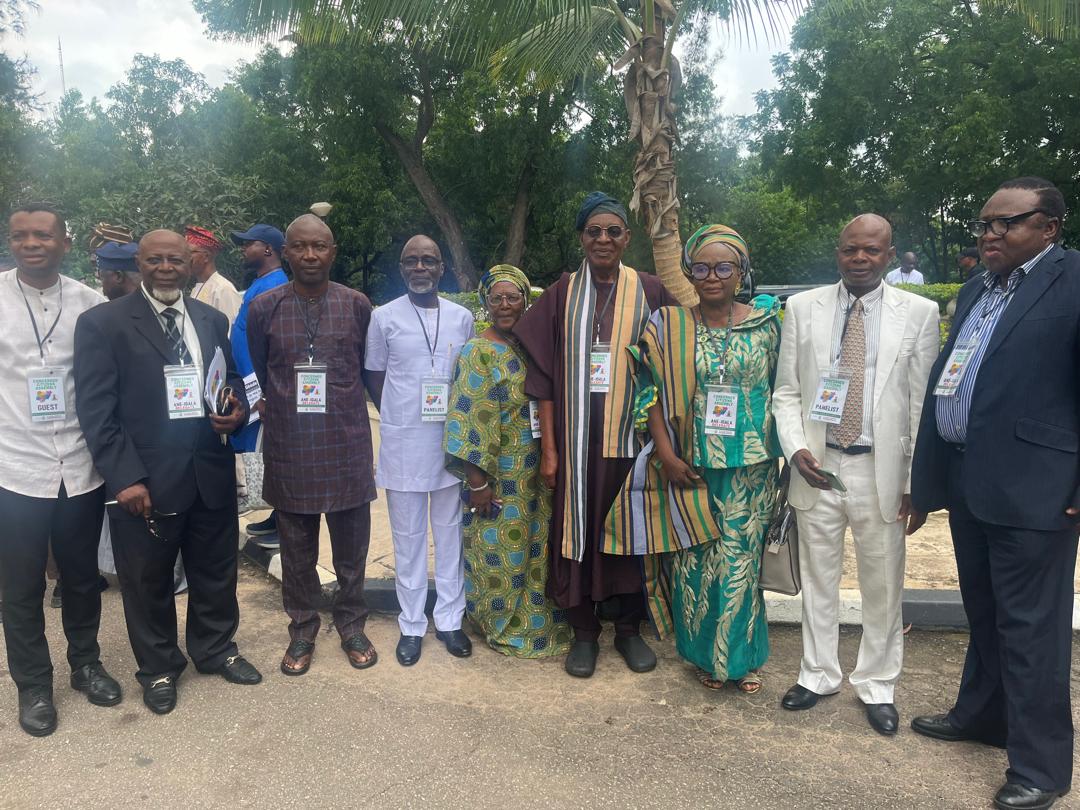
The position was contained in a memorandum presented by Professor Lucy Jumeyi Ogbadu on behalf of representatives of the Ane Igala Region at a constitutional restructuring summit on August 8, 2026. The memorandum proposes a region initially comprising Ankpa, Dekina, Bassa, Olamaboro, Ofu, Idah, Ibaji, Igalamela/Odolu, Omala and Kogi Local Government Areas, as well as the eastern flanks of Lokoja and Ajaokuta, with an estimated population of about four million.
The memorandum said the proposed region was historically part of a powerful precolonial kingdom centred on Idah and governed by the Attah Igala. It also noted the presence of other ethno-linguistic groups, including Bassa Nge, Bassa Nkomo, Igbirra Mozun and Igbirra Koto, with whom it said the Igala had historically co-existed.
As part of its historical argument, the memorandum referred to the September 6, 1841 agreement at Idah between the ‘Attah of the Egarra/Igalla country’ and representatives of Queen Victoria. It said the British engagement with the Attah demonstrated the existence of an established political authority in the territory before subsequent colonial restructuring. Contemporary British records also referred to the Attah as the sovereign chief of the Egarra or Igalla country.
The memorandum attributed the subsequent fragmentation of the kingdom to successive colonial and post-colonial administrative arrangements. It said that in 1915 different parts of the kingdom were placed under Onitsha, Munchi and Nasarawa provinces, while subsequent political reorganisations eventually left parts of the historical territory in different states.
Against this background, the representatives proposed the creation of an autonomous Ane Igala Region, headquartered in Idah, and the voluntary reintegration of Igala communities in parts of Benue, Nasarawa, Enugu, Anambra, Delta, Edo and other parts of Kogi State. The proposed region, according to the memorandum, would operate a parliamentary system with equal representation for constituent local governments and rotational regional leadership.
The memorandum also called for greater control of the region’s natural resources, arguing that its agricultural, mineral, coal and oil resources had not translated into commensurate development. It cited coal mining in particular, claiming that more than 100 trucks of coal leave the region for other parts of Nigeria and Niger Republic while local communities contend with environmental degradation and mining-related deaths.
On oil, the representatives argued that despite the designation of Kogi State as an oil-producing state, the benefits of the 1per centnt derivation arrangement had not reached the region in meaningful development terms. Their proposal is for the region to exercise greater control over its resources, attract investment and remit 10 per cent of its accrued revenue to the Federal Government for responsibilities retained at the centre.
Security was identified as the third major restructuring request. The memorandum said communities in the proposed region were facing banditry, terrorism, kidnapping, and other criminal activities, with insecurity disrupting farming and economic activities. It proposed an integrated regional security network comprising a Regional Police, Civil Defence Corps, Forest Guards, Marine Guards, and Community Vigilantes.
The representatives further proposed a broader restructuring of Nigeria into federated regions, with each region operating under its own constitution and exercising authority over resources and matters outside the Federal Government’s jurisdiction. The memorandum also called for equality of representation at the Federal Executive Council and rotational leadership of the central government among the regions.
Concluding the memorandum, the Ane Igala representatives requested the creation and recognition of Ane Igala Region as an autonomous region within a proposed Federated Regions of Nigeria, alongside the reintegration of Igala communities currently located in Anambra, Benue, Delta, Edo, Enugu and Nasarawa states, as well as relevant parts of Kogi Central and Kogi West. The memorandum described the demand as a response to more than a century of territorial fragmentation and as a quest for history, justice, equity and fair play.