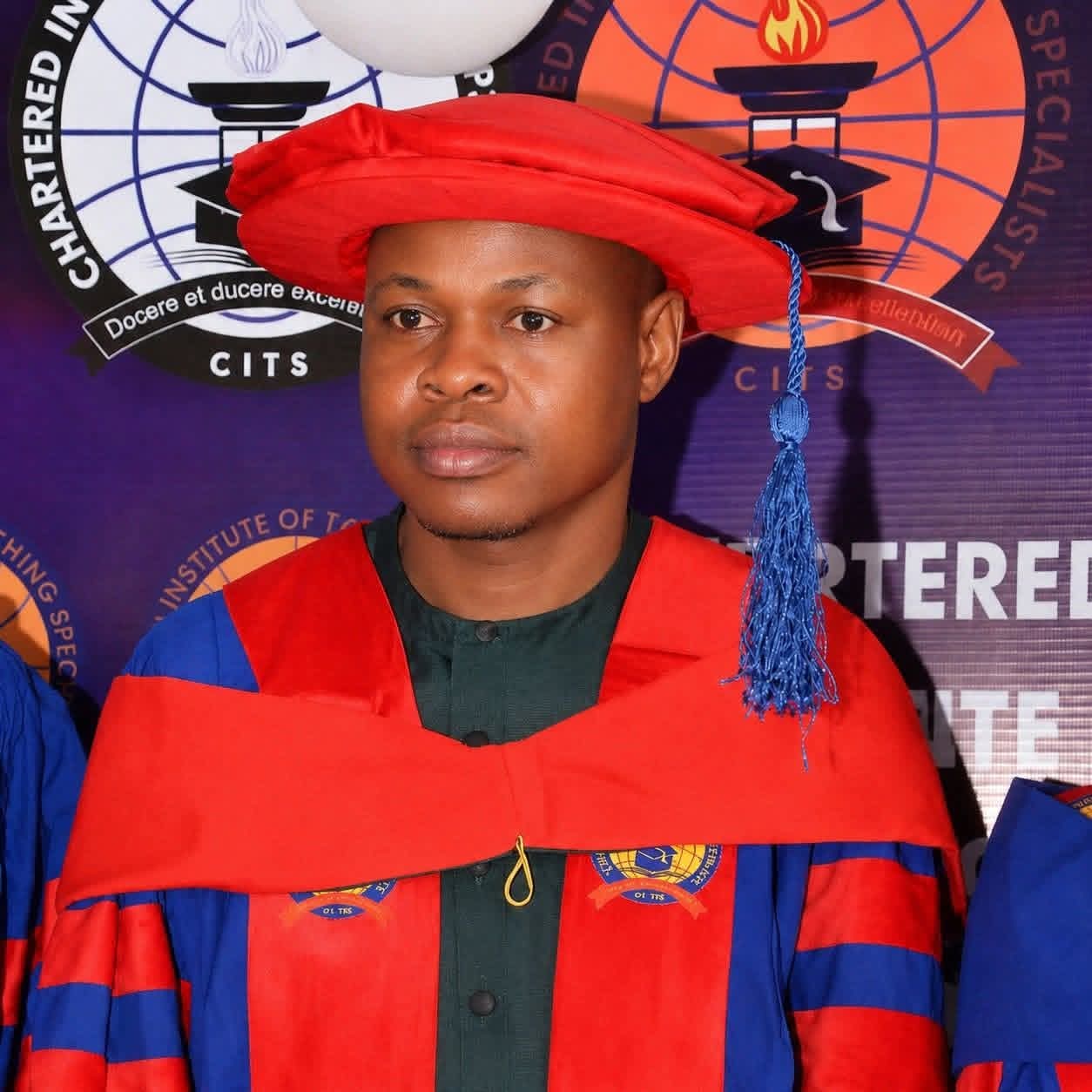








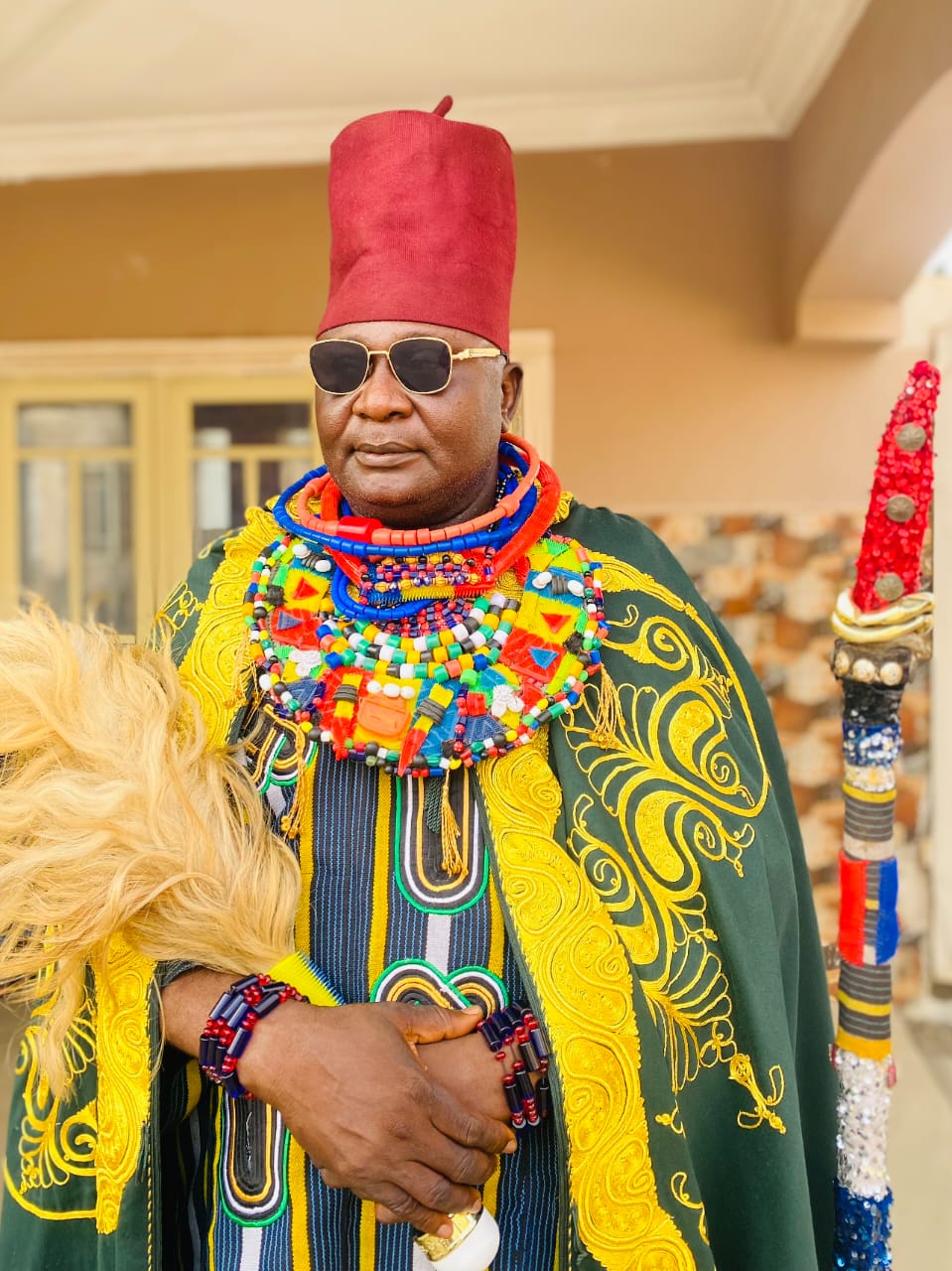
A Scholarly Tribute to Ajofe, Hon. (Dr.) Labaran Yahaya Oyigebe, Achimere Ife (Dooga), Newly Appointed Palace Historian of the Ata Igala, Akahiaka Ata Igala – Edeee!!
By Amb. Valentine Opaluwa Ejeh
Historical Researcher; Scholar of Religion, Conflict, and Peace; Author; Civil Rights Advocate; Executive Director, ACPESI, Abuja.
Abstract
This article offers a scholarly tribute to Ajofe, Hon. (Dr.) Labaran Yahaya Oyigebe, whose appointment as Palace Historian of the Ata Igala marks a critical moment in the cultural and intellectual history of the Igala Nation. Beyond the celebration of his personal achievements, this essay interrogates the tension between historical fact and politically crystallized narratives within Igala historiography. By drawing on Hannah Arendt’s thesis that “the greatest danger of lies is not that they replace truth, but that they destroy our capacity to recognize truth at all,” this paper argues that the preservation of factual memory is not merely an academic obligation but the very foundation of societal direction and identity. The essay contextualizes divergent historical traditions, particularly between the Ata Igala institutional narrative, the Ife-by-River-Benue lineage traditions, and the Igalaogba/Achadu oral archives—and contends that Ajofe’s legacy will be defined by his fidelity to truth.
1. Introduction: When a Historian Becomes a Guardian
The appointment of Dr. Labaran Yahaya Oyigebe as Palace Historian is not a routine cultural transition. It is a moment of epistemic significance, a crossroads where memory, power, identity, and scholarship intersect. Igala history, like many African histories, is a layered palimpsest: part oral tradition, part textual representation by early European writers, part palace-preserved narratives, and part lineage-specific ethnographic memory.
To entrust this mosaic to a scholar of Dr. Oyigebe’s calibre is both a privilege and a burden. For the palace historian does not merely document the past; he interprets the moral architecture of a people’s becoming.
His new calling demands a reckoning with truth, distortion, silence, and remembrance.
2. Divergent Igala Historiographies: A Landscape of Contested Memories
Igala historiography does not speak with a single voice. Three major strands animate its debates:
2.1 The Ata Igala Institutional Narrative
This version asserts:
Abutu Ejeh as a Jukun of Wukari origin.
Pre-Abutu inhabitants of Idah being Etemahi and Igalamela groups.
Igalaogba/Achadu clans as originally Igbo slave-hunting migrants.
Aga Aidoko, and several clans, as of Bini, Yoruba, Ebira, etc., migratory fragments.
This narrative, while institutional, is contested by alternative memory systems.
2.2 Ife-by-River-Benue Lineage Traditions (Achimere, Dooga Communities)
This tradition—which Dr. Oyigebe himself has championed—teaches that:
Abutu Ejeh’s ancestors originated from Ife by the River Benue Valley, temporarily sojourning among the Jukun.
Abutu Ejeh was a kinsman of Adah Adagba, not a foreign conqueror.
Several clans, including Etemahi, trace their origins to Ife-by-Benue.
The Igalamela was a constructed political union, not an ancestral singularity.
This memory system resists the reduction of Igala origins to a foreign imposition.
2.3 Igalaogba/Achadu Oral Archives (Akogu Omaga Lineage)
This deeply rooted tradition argues:
The Achadu/Igalaogba clans are aboriginal to Idah and wider Igala settlements.
The clans possessed independent Onu and Ata stools long before the Abutu dynasty.
No conquest of Idah by Abutu or Ayegba is supported by oral or ethnographic memory.
Settlement patterns show centuries of antecedent to the 16th-century migration of Abutu.
This strand insists that Igala civilization was indigenously evolved, not imported.
3. The Historian’s Dilemma: Truth, Power, and the Weight of Appointment
Dr. Oyigebe stands at a delicate intersection. His scholarly work, interviews, and field research have long aligned with the Ife-by-Benue and Igalaogba/Achadu traditions. Yet the palace seat to which he is now appointed has institutional expectations rooted in the Abutu-centric narrative.
The question confronting him is therefore not trivial:
Should a historian silence truth to align with the demands of power,
or elevate power by rooting it in truth?
The philosopher Hannah Arendt warns of the consequences of the former.
4. The Arendtian Warning: The Rupture of Truth Itself
Hannah Arendt’s famous assertion—
“The greatest danger of lies is not that they replace truth, but that they destroy our ability to recognize truth at all, leaving society lost without direction.”
This offers a profound lens for this moment in Igala historiography.
If the palace historian abandons factual memory, several consequences follow:
4.1 Truth Loses Its Meaning
Narratives become arbitrary.
Identities become negotiable propaganda.
Future generations inherit confusion.
4.2 Society Develops Historical Amnesia
Falsehood becomes the architecture of memory.
Authentic lineage groups are erased or delegitimized.
Clans inherit identity crises not created by their ancestors.
4.3 Political Legitimacy Rests on Myth, Not Heritage
When power depends on convenient stories,
it becomes fragile, brittle, and vulnerable to contestation.
4.4 The Community’s Moral Compass Breaks
A people unable to distinguish fact from convenient fiction becomes directionless.
Thus, Arendt’s warning is not philosophical abstraction—it is a cultural prophecy for any society that trades truth for institutional comfort.
5. What Is at Stake: The Future of Igala Historical Consciousness
Dr. Oyigebe’s voice has long served as a bridge between:
oral archives
ethnographic patterns
lineage traditions
cultural memory
and scholarly reasoning
To retreat from that intellectual integrity now would:
impoverish the palace
mislead future scholars
silence aboriginal narratives
reproduce historical distortions
validate political constructions as ancestral truth
To remain firm is to:
protect the richness of Igala plurality
heal historical fractures
elevate the throne by grounding it in honesty
give the younger generation a compass for identity
secure his place in the intellectual pantheon of the Igala nation
His legacy depends not on pleasing the living,
but on remaining faithful to the dead and truthful to the unborn.
6. Tribute: The Historian Who Must Walk the High Road
This tribute honours a man of profound memory and rare clarity.
Dr. Oyigebe’s scholarship has long demonstrated:
intellectual independence
a passion for ancestral truth
respect for oral traditions
commitment to ethnographic precision
courage in challenging convenient distortions
As he assumes the palace position, the Igala Nation watches with the hope that:
he will not bend to the gravitational pull of institutional narratives,
but will allow truth to refine, expand, and strengthen the institution itself.
A palace becomes greater when its historian is honest.
A historian becomes immortal when he refuses to betray the truth.
7. Conclusion: The Legacy of Truth
In honor of Ajofe, this essay also issues a call to conscience:
Let him choose the legacy of truth,
for only truth survives the erosion of centuries.
In the river of time,
falsehood floats on the surface
like debris, but the truth sinks deep,
anchoring itself to the bedrock of memory
where future generations may find it
and rebuild their identity.
If he remains faithful to the factual archives of his people,
Dr. Oyigebe will not merely be a palace historian, he will be remembered as the man who restored balance to Igala memory and rescued a nation’s truth
from the quiet tyranny of convenient narratives.