





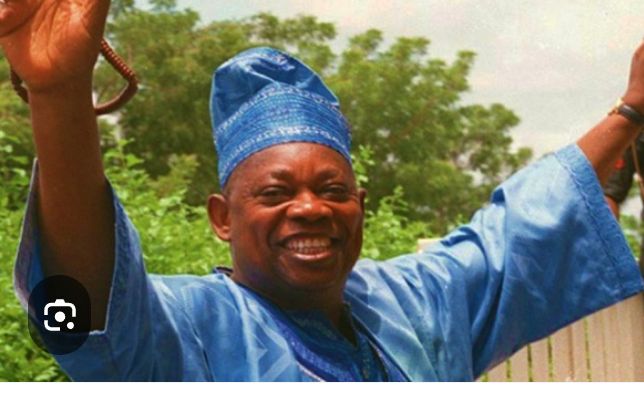
*( Commemorating the June 12 Anniversary and the Democratic Struggle in Nigeria.)*
*By Aduojo J. Agi, Ph.D.*
*INTRODUCTION* .
Few individuals in Nigeria’s history have left an imprint as profound and enduring as Chief Moshood Kashimawo Olawale Abiola, popularly known as M.K.O. Abiola. His name has become inseparable from the June 12, 1993 Presidential Election, widely regarded as the freest, fairest, and most credible election ever conducted in Nigeria.
More than three decades after that historic election, June 12 remains a defining moment in Nigeria’s democratic evolution. It symbolizes the triumph of the people’s will over authoritarianism, the resilience of democratic ideals, and the sacrifices made by countless Nigerians in the struggle for representative governance.
The story of M.K.O. Abiola is not merely the story of a Politician. It is the story of an extraordinary businessman, philanthropist, nationalist, sports promoter, family man, statesman, and ultimately a martyr whose life and death altered the course of Nigerian history.
*HUMBLE BEGINNINGS AND ACADEMIC EXCELLENCE.*
Chief M.K.O. Abiola was born on August 24, 1937, in Abeokuta, Ogun State, Nigeria.
Born into a modest family, Abiola displayed exceptional intelligence and determination from an early age. Despite financial difficulties, he excelled academically and earned scholarships that enabled him to pursue higher education.
He studied Accountancy at the University of Glasgow in Scotland and became a qualified accountant. His academic achievements reflected his disciplined work ethic, analytical mind, and commitment to excellence.
His educational journey transformed him from a young boy of humble origins into one of Africa’s most successful businessmen and influential leaders.
Building a Business Empire
M.K.O. Abiola rose to become one of Africa’s wealthiest and most successful entrepreneurs.
His business interests spanned :
-Telecommunications.
-Publishing.
-Oil and gas.
-Banking.
-Shipping.
-Agriculture.
-Aviation.
-International trade.
-Manufacturing.
Through various investments and strategic partnerships, he built a vast multinational business network extending across Africa, Europe, North America, and the Middle East.
His remarkable business acumen earned him international recognition and respect among global business leaders.
Yet wealth alone did not define him.
What distinguished Abiola was his willingness to use his resources for the benefit of others.
*AFRICA’S GREATEST PHILANTHROPIST.*
Chief M.K.O. Abiola was widely regarded as one of Africa’s greatest philanthropists.
His generosity transcended ethnic, religious, and political boundaries.
He donated extensively to :
– Educational institutions.
– Religious organizations.
– Community projects.
– Healthcare initiatives.
– Scholarship programmes.
– Infrastructure development.
– Youth empowerment schemes.
Thousands of students benefitted from his scholarships.
– Countless families received assistance directly from him.
– Numerous mosques, churches, schools, and community facilities across Nigeria bear testimony to his generosity.
Many Nigerians fondly remembered him as a man who rarely turned away anyone seeking help.
His philanthropy reflected a belief that wealth carried social responsibility.
*THE PILLAR OF SPORTS IN AFRICA.*
M.K.O. Abiola’s contribution to sports remains one of the most celebrated aspects of his legacy.
He invested heavily in sports development and sponsorship across Africa.
His support helped elevate Nigerian sports on the global stage.
He sponsored football competitions, clubs, athletes, and sporting institutions at a time when private investment in sports was limited. He also founded his Football Team called ‘ABIOLA BABES’.
His commitment earned him the prestigious title :
“Pillar of Sports in Africa.”
Many sports administrators and athletes have acknowledged that his interventions helped lay foundations for future sporting successes in Nigeria.
His vision demonstrated that sports could serve as a tool for national unity, youth development, and international recognition.
*LEADERSHIP STYLE AND POLITICAL PHILOSOPHY.*
Abiola possessed a rare combination of intelligence, charisma, magnanimity, and accessibility.
He related easily with ordinary citizens while maintaining relationships with world leaders, business executives, traditional rulers, and political elites.
His political philosophy centered on :
– National unity.
– Economic empowerment.
– Poverty reduction.
– Social justice.
– Democratic governance.
– Inclusive development.
Unlike many politicians, he enjoyed significant support across Nigeria’s ethnic and religious divides.
His famous campaign slogan :
“Hope ’93”
captured the aspirations of millions of Nigerians seeking a better future.
*THE JUNE 12, 1993 ELECTION.*
The June 12 Presidential Election remains one of the most significant political events in African history.
Running under the Social Democratic Party (SDP), M.K.O. Abiola defeated his opponent, Alhaji Bashir Tofa of the National Republican Convention (NRC).
Remarkably, Abiola won support across regions, religions, and ethnic groups.
He even won in areas considered strongholds of his opponent.
The election demonstrated that Nigerians could transcend ethnic and religious divisions when presented with credible leadership.
Observers widely agreed that the election reflected the genuine will of the Nigerian people.
However, the military government of General Ibrahim Babangida annulled the election before the final declaration of results.
The annulment plunged Nigeria into political crisis.
*BETRAYAL AND THE DEMOCRATIC STRUGGLE.*
The June 12 struggle exposed both heroes and opportunists.
Many individuals who publicly supported democracy abandoned Abiola when the consequences became dangerous.
– Some military officers who had benefited from his friendship failed to stand with him.
– Certain political associates distanced themselves.
– Some business partners prioritized personal interests over principles.
– Even within wider social and family circles, support was not always unanimous.
The events demonstrated an enduring lesson :
– True loyalty is often tested during adversity rather than prosperity.
Despite intense pressure, Abiola refused to abandon his mandate.
He maintained that the June 12 mandate belonged to the Nigerian people.
*THE COURAGE AND SACRIFICE OF KUDIRAT ABIOLA.*
No discussion of June 12 is complete without recognizing the immense contribution of Abiola’s wife, Kudirat Abiola.
Following her husband’s detention, Kudirat emerged as one of the strongest voices of resistance against military dictatorship.
She mobilized democratic activists, organized protests, and kept the June 12 struggle alive.
Her courage inspired many Nigerians.
On June 4, 1996, she was assassinated in Lagos and Her death shocked the nation and transformed her into a symbol of democratic resistance.
Today, Kudirat Abiola is remembered as one of the heroines of Nigeria’s democracy.
*THE INFLUENCE OF SIMBIAT ABIOLA.*
Before Kudirat, another remarkable woman played a significant role in Abiola’s life—his first wife, Simbiat Atinuke Abiola.
She provided stability, support, and encouragement during the formative years of his business and family life.
Many close associates acknowledged her influence in helping build the strong family foundation upon which Abiola’s success was established.
Her contributions remain an important part of the Abiola story.
*ABACHA’S REGIME AND YEARS OF IMPRISONMENT.* .
Following his declaration of himself as President-elect, Abiola was arrested by the military government of General Sani Abacha in 1994.
He spent years in detention under harsh conditions.
Despite offers and pressures that might have secured his release, he refused to renounce his mandate.
His imprisonment became a symbol of the struggle between military dictatorship and democratic legitimacy.
The world watched as international organizations, foreign governments, and human rights advocates demanded his release.
Yet he remained incarcerated.
*DEATH IN CUSTODY.*
On July 7, 1998, shortly after the death of General Abacha and during the transition government of General Abdulsalami Abubakar, M.K.O. Abiola died while still in detention.
His death generated widespread controversy and speculation.
Many Nigerians believed that the circumstances surrounding his death were not fully explained.
Questions regarding responsibility, accountability, and transparency continue to linger decades later.
Regardless of differing interpretations, one fact remains undeniable :
M.K.O. Abiola died while pursuing the democratic mandate freely given to him by the Nigerian people.
*RECOGNITION BY SUBSEQUENT GOVERNMENTS.*
For many years, official recognition of Abiola’s sacrifice remained limited.
However, later administrations gradually moved toward acknowledging his role in Nigeria’s democratic history.
A major milestone occurred in 2018 when President Muhammadu Buhari officially recognized June 12 as Nigeria’s Democracy Day.
Abiola was posthumously awarded the Grand Commander of the Federal Republic (GCFR), an honour traditionally reserved for Presidents.
This recognition represented an important step toward National Reconciliation and Historical Justice.
Yet many Nigerians believe that the full story of June 12 still requires deeper National reflection and institutional reforms.
*THE ARROGANCE AGAINST DEMOCRACY.*
One of the ironies of history is that some individuals and groups who today enjoy the benefits of democratic governance played little or no role in defending democracy during its most difficult period.
Others actively opposed the struggle.
The June 12 experience reminds us that democracy should never be taken for granted.
Freedom, Representation, and Civil Liberties often come at enormous costs.
The sacrifices of M.K.O. Abiola, Kudirat Abiola, Pa Alfred Rewane and countless activists must remain part of Nigeria’s democratic memory.
*SIGNIFICANCE OF JUNE 12 TO NIGERIA.*
June 12 represents :
– The supremacy of the people’s mandate.
– National unity beyond ethnicity and religion.
– Resistance against authoritarianism.
– Courage in the face of oppression.
– The power of democratic ideals.
– The sacrifices required for freedom.
It remains a reminder that sovereignty belongs to the people.
*LESSONS FOR PRESENT AND FUTURE GENERATIONS.*
The June 12 experience teaches several important lessons :
1. *DEMOCRACY MUST BE PROTECTED.*
Democracy survives only when citizens defend it.
2. *LEADERSHIP REQUIRES SACRIFICE.*
True leaders are willing to endure hardship for their convictions.
3. *NATIONAL UNITY IS POSSIBLE.*
June 12 demonstrated that Nigerians can unite across ethnic and religious lines.
4. *INSTITUTIONS MATTER.*
Strong institutions are essential to protect electoral outcomes.
5. *HISTORY MUST BE PRESERVED.*
Future generations must understand the sacrifices behind democratic freedoms.
6. *WEALTH IS MOST MEANINGFUL WHEN USED TO SERVE HUMANITY.*
Abiola transformed wealth into social impact.
*CONCLUSION* .
Chief M.K.O. Abiola remains one of the most consequential figures in Nigeria’s history.
He was a successful accountant, accomplished businessman, celebrated philanthropist, sports icon, nationalist, and democratic martyr.
His life embodied the possibilities of enterprise, generosity, patriotism, and courage.
His death transformed him into a permanent symbol of the struggle for democratic governance in Nigeria.
As Nigeria commemorates June 12 each year, the Nation honours not only a man but an idea—the belief that the will of the people must prevail over tyranny, injustice, and political manipulation.
History will continue to remember Chief Moshood Kashimawo Olawale Abiola as the acclaimed winner of the June 12, 1993 Presidential Election and as one of Africa’s most enduring symbols of democracy, sacrifice, and hope.
May the lessons of June 12 continue to guide Nigeria toward a future built on justice, accountability, unity, and genuine democratic governance.
— Aduojo J. Agi, Ph.D.
President, Ojone Foundation Nigeria
Founder, Ojone Centre for Leadership and Mentorship (OCLM).