





By Amb. Valentine Opaluwa Ejeh, PhD
Abuja
Introduction
There are politicians who enter politics because politics offers them a platform. There are others who enter politics because they believe that politics itself can become a platform for transforming society. Between these two categories lies a profound difference: one sees political power as an instrument of personal elevation; the other sees it as a covenant of service to the people.
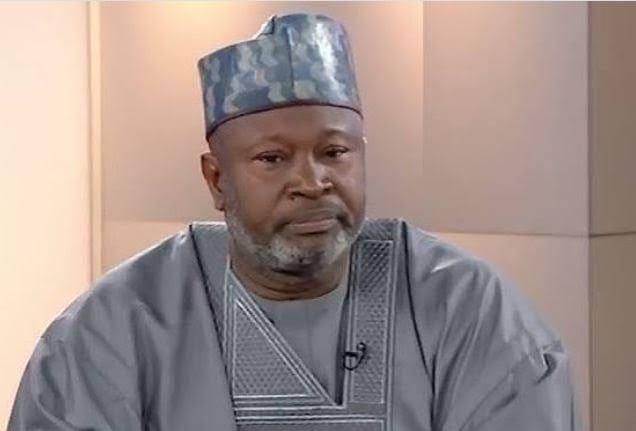
Alhaji Yusuf Dabo Mamman Dantalle belongs, in the estimation of his admirers and political associates, to the latter tradition.
His political journey has become an increasingly significant feature of Nigeria’s contemporary democratic landscape. As National Chairman of the Allied Peoples Movement (APM), and as National Chairman of the Inter-Party Advisory Council (IPAC), Dantalle occupies positions that place him at the intersection of party politics, opposition politics and the broader institutional conversation about Nigeria’s democracy.
His re-election as National Chairman of the APM in August 2026, at a time when the party is positioning itself for the 2027 general election, is more than a renewal of an administrative mandate. It represents a vote of confidence in a political actor who has demonstrated an uncommon capacity to remain relevant within an intensely competitive and often turbulent political environment.
The APM itself has assumed a new significance in the emerging political equation ahead of 2027. With Oyo State Governor Seyi Makinde emerging as its presidential candidate and Bauchi State Governor Bala Mohammed taking up the position of National Leader, the party has attracted considerable attention as an opposition platform seeking to offer Nigerians a political alternative.
At the centre of this evolving political architecture stands Dantalle.
The Making of a Political Force
Political stature is rarely manufactured overnight. It is accumulated through years of engagement, negotiation, contestation, resilience and an understanding of the complex currents that determine political behaviour.
Dantalle’s trajectory illustrates this reality.
His political relevance has grown not merely from occupying an office, but from his willingness to participate actively in the difficult conversations surrounding Nigeria’s democracy. He has increasingly become a voice that cannot easily be ignored whenever questions of political parties, electoral reforms, opposition politics and democratic development arise.
This is particularly important in a country where political parties often struggle to distinguish themselves by ideology, policy and philosophical orientation. Dantalle’s political interventions have helped keep alive the argument that political parties should not merely exist as vehicles for elections; they should become institutions through which citizens articulate competing visions of governance.
That philosophy gives meaning to his political engagement.
For Dantalle, politics should ultimately return to the ordinary Nigerian.
It should return to the farmer who needs access to good roads to transport his produce.
It should return to the young graduate searching for employment.
It should return to the trader who requires a secure and enabling economic environment.
It should return to the child sitting in an overcrowded classroom.
It should return to the family that needs affordable healthcare.
It should return to communities yearning for electricity, water, security and basic infrastructure.
This is the heart of people-centred politics.
And it is here that Dantalle’s political philosophy acquires significance.
Politics as Service, Not Self-Preservation
The greatest tragedy of politics is not that politicians disagree. Democracy actually requires disagreement.
The greater tragedy is when political power loses its connection with the people.
A democracy becomes fragile when elections become nothing more than periodic rituals for changing occupants of political offices while the material conditions of citizens remain unchanged.
The politics that Dantalle advocates, as understood from his public interventions and leadership posture, is one in which political authority must ultimately produce tangible social value.
Government must build.
Government must provide.
Government must protect.
Government must empower.
Government must create opportunities.
Government must give citizens reasons to believe that democracy can improve their lives.
This philosophy becomes particularly relevant in Nigeria, where the credibility of democratic governance is often judged not only by the conduct of elections but by what happens after elections.
The ballot is therefore not the destination.
It is the beginning of a social contract.
The citizen votes because he or she expects government to translate political promises into roads, schools, hospitals, security, jobs, economic opportunities and a dignified standard of living.
This is why the political philosophy of service deserves to remain at the centre of Nigeria’s democratic conversation.
The Voice of Opposition
One of Dantalle’s most visible contributions in recent times has been his emergence as one of the more vocal figures within Nigeria’s opposition political space.
Opposition politics is indispensable to democracy.
It provides the institutional mechanism through which government policies can be questioned, scrutinised and challenged. A responsible opposition does not oppose everything merely because it is in opposition. Rather, it identifies weaknesses, demands accountability and presents alternatives.
Dantalle’s role within the APM therefore assumes a significance beyond party administration.
The APM’s emerging 2027 structure places the party within an increasingly competitive opposition environment. Governor Seyi Makinde has publicly described the party’s task as working with other opposition parties to provide Nigerians with a credible alternative in the 2027 election.
For a National Chairman, this is an enormous responsibility.
It requires political imagination.
It requires negotiation.
It requires patience.
It requires the capacity to bring together individuals and interests that may not always agree.
And above all, it requires the understanding that opposition politics should not be reduced to criticism of the government in power. It must also demonstrate the capacity to govern.
That is the challenge before Dantalle and the APM.
The IPAC Dimension
If his leadership of a political party demonstrates his capacity for partisan political organisation, his leadership of the Inter-Party Advisory Council places him in an entirely different democratic arena.
IPAC represents a broader political constituency. Its concerns extend beyond one party and touch upon the health of Nigeria’s multiparty democracy.
As National Chairman of IPAC, Dantalle has participated in national conversations on electoral reforms, political-party development, internal democracy and the credibility of elections. IPAC’s own platform identifies its mission with free, fair, credible and inclusive elections and the deepening of democracy.
His recent intervention on internal party democracy is particularly instructive. In June 2026, Dantalle raised concerns that changes affecting indirect party primaries could weaken internal participation and concentrate political power in the hands of party elites.
Whether one agrees with every political position he takes or not, such interventions demonstrate the importance of having political actors willing to participate in the institutional debate about how democracy should function.
That is how democratic systems mature.
Democracy cannot survive on elections alone.
It needs institutions.
It needs political parties.
It needs civic participation.
It needs responsible opposition.
It needs electoral credibility.
And it needs political leaders who understand that their responsibility extends beyond winning elections.
A Bridge Between Party Politics and National Politics
Dantalle’s political importance may ultimately be found in his ability to operate across political boundaries.
As APM Chairman, he has a partisan responsibility.
As IPAC Chairman, he has a wider responsibility to the political-party community.
The ability to navigate these two dimensions requires considerable political dexterity.
It requires knowing when to be partisan and when to be institutional.
It requires understanding the difference between defending a political party and defending democracy itself.
This is where political maturity becomes indispensable.
Nigeria needs politicians who can fight fiercely for their political convictions without destroying the institutions through which political disagreements are resolved.
It needs leaders who can disagree without becoming enemies of democracy.
It needs political actors who understand that today’s opposition may become tomorrow’s government, and that today’s government may become tomorrow’s opposition.
Dantalle’s journey offers an opportunity to reflect on this larger democratic principle.
A New Political Moment for APM
The 2027 general election promises to be an important moment in Nigeria’s political history.
The emergence of the APM as a platform carrying the presidential ambition of Governor Seyi Makinde, alongside the presence of Governor Bala Mohammed as National Leader, has given the party a considerably higher political profile.
But political visibility alone does not guarantee electoral success.
The real test will be whether the party can convert political personalities into a coherent national political project.
That is where Dantalle’s responsibility becomes enormous.
He must help build structures.
He must help maintain unity.
He must strengthen party organisation.
He must encourage issue-based politics.
He must create room for younger political actors.
He must help transform political enthusiasm into grassroots organisation.
Above all, he must help ensure that the party’s political message speaks to the aspirations of Nigerians beyond the boundaries of individual personalities.
The ultimate question must therefore be:
What does APM offer the Nigerian people?
The answer cannot merely be another political arrangement.
It must be a compelling vision of governance.
The Measure of a Political Juggernaut
A political juggernaut is not necessarily the loudest person in the room.
Neither is it the politician who commands the largest convoy.
True political strength is measured by influence, endurance, strategic intelligence, organisational capacity and the ability to shape political conversations.
By this standard, Dantalle’s emergence as a significant voice in Nigeria’s opposition politics deserves recognition.
His political journey reflects the reality that influence is not always conferred by constitutional office. Sometimes it is earned through persistent engagement.
Sometimes it is earned by speaking when others remain silent.
Sometimes it is earned by standing in difficult political spaces and refusing to disappear.
And sometimes it is earned by remaining committed to a political vision when the political environment becomes uncertain.
This is the essence of political resilience.
An Ode to Service
To celebrate Yusuf Dabo Mamman Dantalle is therefore not simply to celebrate an individual.
It is to celebrate the possibility that politics can still be used as an instrument of service.
It is to celebrate the idea that political leadership should have a human face.
It is to remind the political class that behind every statistic is a human being; behind every constituency is a family; behind every vote is a hope; and behind every political mandate is a responsibility.
The true monument of a politician is not the office he occupies.
It is the number of lives touched by his ideas.
It is the institutions strengthened by his leadership.
It is the young people inspired by his example.
It is the democratic space enlarged by his participation.
And it is the political culture improved by his contribution.
Dantalle’s place in Nigeria’s political history will ultimately be determined by the enduring value of his contribution to the democratic process. But already, his trajectory presents the portrait of a man who has chosen to remain deeply engaged in the political conversation at a particularly consequential moment in the nation’s history.
As Nigeria approaches 2027, the country needs political leaders who understand that democracy is not merely about who occupies Aso Rock.
It is about who occupies the conscience of the people.
It is about whether the ordinary citizen can look at government and say: this democracy works for me.
It is about whether political leadership can translate promises into possibilities.
It is about whether power can become service.
And it is about whether politics can once again become an instrument for building a better society.
That is the larger significance of Yusuf Dabo Mamman Dantalle.
He stands at a fascinating intersection of party leadership, opposition politics, electoral advocacy and democratic engagement.
His journey is still unfolding.
His political assignment is far from complete.
The road to 2027 will test his strategic capacity, his resilience and his ability to build bridges across Nigeria’s complicated political landscape.
But if political leadership is ultimately measured by one’s willingness to serve, one’s courage to participate and one’s determination to keep the democratic conversation alive, then Dantalle’s contribution deserves a place of recognition.
For in the theatre of Nigerian politics, where many seek power for themselves, there remains an enduring need for those who insist that power must ultimately return to the people.
And that is the political ideal worth celebrating.
Alhaji Yusuf Dabo Mamman Dantalle:
A political strategist.
A party builder.
A voice of opposition.
An advocate of democratic engagement.
A bridge across political interests.
And, above all, a believer in the proposition that politics finds its noblest meaning when it becomes an instrument for improving the lives of the people.
May his political journey continue to contribute to the strengthening of Nigeria’s democratic institutions, the deepening of political participation and the emergence of a governance culture in which the welfare of the people remains the ultimate measure of political success.