








* As Nigeria Lags behind Germany.
Against the backdrop of epileptic power supply in Nigeria has again come into sharp focus, with a comparative assessment of the country’s power sector and that of Germany revealing a wide disparity in installed capacity, grid infrastructure, electricity availability and technical manpower.
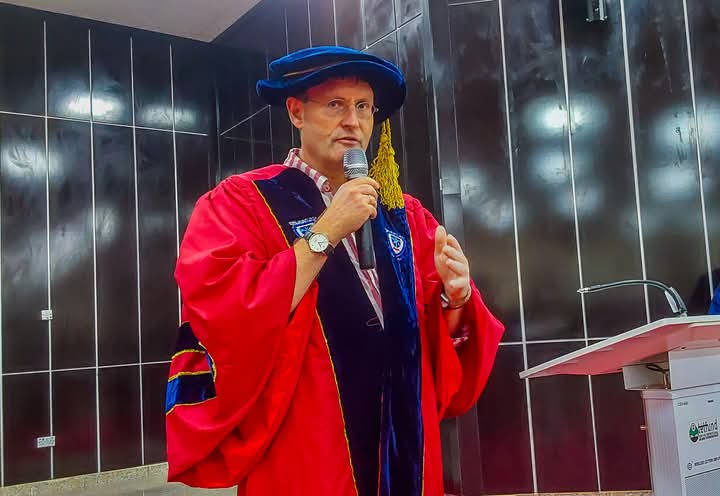
The comparison, contained in a presentation on Electrical Energy Supply in Germany and Nigeria – Demand, Structure and Effects on Educational Needs, by Prof. Dr.-Ing. Ralf-Dieter Rogler of the University of Applied Sciences Dresden, Germany, at the 2nd distinguish public lecture under the leadership of Professor Gbenga Ibileye Vice Chancellor of Federal University Lokoja, held on Friday in the main campus Felele lokoja.
Delivering his paper, Prof Rogler argued that while Germany has developed an extensive and highly structured electricity network, Nigeria continues to face significant gaps in generation capacity, transmission infrastructure and human capital.
According to the presentation, Germany, with a population of about 82 million, has approximately 119,400 megawatts of installed electrical power and about 82,700MW available power.
Nigeria, on the other hand, with an estimated population of 240 million in the presentation, has about 6,400MW installed capacity, of which only approximately 3,800MW is indicated as available.
The disparity becomes even more striking when electricity capacity is considered on a per-capita basis. While Germany records about 840 watts of electrical power per inhabitant, Nigeria has approximately 10 watts per inhabitant.
Prof.Rogler also highlighted the enormous difference in the scale of the two countries’ electricity transmission infrastructure.
Germany’s 220/380kV transmission grid stretches about 40,000 kilometres, compared with approximately 6,000 kilometres in Nigeria. At the 110kV level, Germany has about 75,000 kilometres of grid infrastructure, while Nigeria has about 4,000 kilometres.
The figures point to a fundamental challenge confronting Nigeria’s electricity sector: the need not only to increase generation but also to build the transmission and distribution infrastructure required to deliver available power reliably to homes, businesses and industries.
The presentation further puts electricity availability in Germany at about 99.99 per cent, compared with approximately 70 per cent for Nigeria. It also estimates annual power losses at about eight minutes in Germany against approximately 2,800 minutes in Nigeria.
According to the Erudite Prof, Germany’s experience, as outlined in the presentation, also reflects a major transition in the structure of energy production.
He said Germany imports about 75 per cent of its primary energy, while approximately 25 per cent is generated domestically. Total primary energy demand is put at about 16,000 petajoules, equivalent to approximately 4,400 terawatt-hour.
“In electricity generation, renewable energy has become increasingly significant. The presentation puts Germany’s installed electrical power at about 223GW, with renewable sources accounting for approximately 140GW, or 65 per cent.
He added that renewable capacity, wind energy accounts for about 64GW, representing approximately 45 per cent, while photovoltaic solar contributes about 59GW, or 42 per cent.
“The development has implications for the country’s electricity grid, as increasing volumes of electricity generated from wind and solar have to be transported and distributed.”
According to the presentation, the traditional distribution grid is gradually changing into a “collection grid”, reflecting the growing importance of decentralised renewable electricity generation.
Prof. Rogler further noted that German energy transition is structured around a gradual shift from conventional primary energy sources towards renewable energy and energy storage adding that the material identifies three broad stages: the period from 1990 to 2010, when primary and renewable energy formed the principal components alongside consumption; 2010 to 2030, characterized by the increasing role of electrical energy storage; and 2030 to 2050, when both electrical and chemical storage are expected to become increasingly important.
Germany’s installed conventional electricity capacity is given as about 75GW, representing 35 per cent of the overall installed capacity. Coal accounts for about 36GW, gas 27GW, nuclear 4.5GW and other sources about 7GW.
The presentation also notes Germany’s plan to phase out the use of coal for electricity generation by 2038, however, the figures presented paint a different picture for Nigeria.
He disclosed that beyond the relatively low level of available generation capacity, Nigeria faces a major infrastructure and manpower challenge if it is to build an electricity system capable of supporting a growing population and expanding economy.
Comparing Germany’s approximately 130 faculties of electrical engineering with only seven in Nigeria, he noted, puts annual engineering graduates at about 72,500 in Germany compared with approximately 37,500 in Nigeria, while the overall number of engineers is estimated at about 2.2 million in Germany and 80,000 in Nigeria.
He added that the he disparity is particularly significant given Nigeria’s population growth, as Nigeria’s population growth rate is put at 2.2 %, compared with 0.1 per cent for Germany.
He pointed out that one of the major conclusions drawn from the comparison is that Nigeria’s electricity crisis cannot be addressed through physical infrastructure alone, but through increased educational capacity in electrical engineering as one of the country’s critical needs.
He called for more faculties of electrical engineering and more engineers, while identifying research areas including electrical power system diagnostics, type testing, direct current systems, safety in cases of electrical arcs across low-, high- and direct-current systems, as well as electrical and chemical energy storage.
According to him , the argument is significant because modern electricity systems require highly trained professionals capable of designing, operating, maintaining and upgrading increasingly complex networks.
Prof. Rogler’s presentation also reflects his previous engagements in Nigeria, listing four visits to Lagos and two to Abuja, with projects involving NEPA/PHCN, the University of Lagos, Anchor University and HiVoTec.
He advised the Nigeria government to structure engagement in infrared measurements, dissolved gas analysis on transformers, education, and solar and storage systems stressing that such technical and academic cooperation could become increasingly important as Nigeria seeks to improve the reliability of its electricity infrastructure and develop the specialist manpower needed to operate it.
He said the comparison ultimately underscores a point often lost in Nigeria’s electricity debate: solving the power problem requires more than generating additional megawatts as generation must be matched by transmission capacity, distribution infrastructure, technical expertise, system protection, maintenance, diagnostics and storage technologies.
He explained that Germany’ s electricity system illustrates how generation, transmission, distribution, renewable energy and technical education operate as interconnected components of a modern energy system, while charging Nigeria economy to tackle both infrastructural and institutional challenge..
“With a much larger and faster-growing population, limited available generation, shorter transmission networks and a smaller pool of engineers, the country faces a substantial task in closing the electricity gap.
“The figures contained in my presentation provide a stark snapshot of that gap — but they also point towards the areas where investment in infrastructure, technology, research and education could make the greatest difference.
“For a country seeking to industrialize, create jobs and improve living standards, dependable electricity remains more than an energy-sector issue. It is a foundation for economic development.And closing the gap will require Nigeria to build not only more power plants, but also the grid, expertise and institutions capable of turning electricity generation into reliable power for citizens and businesses.” He pointed out.