


*By Jerome Aduojo Agi, Ph.D* .
“The true measure of leadership is not merely how long one occupies public office, but the lives touched, institutions strengthened, opportunities created and legacies left behind.”
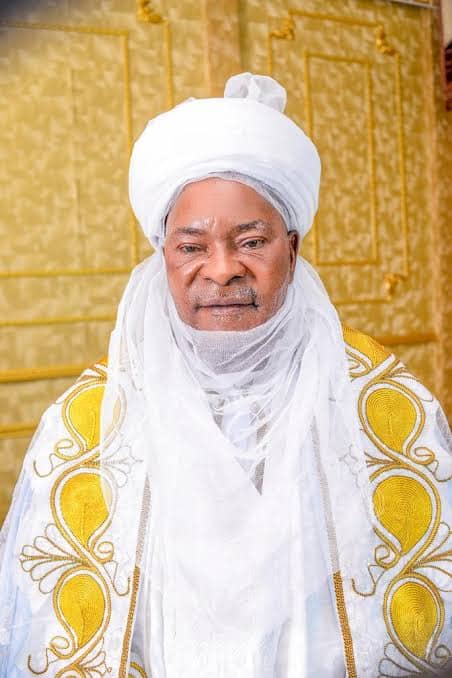
The passing of His Excellency, Alhaji Dr. Ibrahim Adejo Idris, CON—affectionately known as Ibro and widely called Baba Kogi—on September 20, 2026, marks the end of an important chapter in the political and developmental history of Kogi State.
He died in the United Kingdom at the official age of 77. The Kogi State Government subsequently declared three days of mourning, describing his death as a profound loss and acknowledging his administration’s interventions in infrastructure, education, healthcare and institutional development.
For those of us who encountered him not merely as a Political figure but as a leader, father, mentor and benefactor, however, Ibrahim Idris cannot adequately be remembered through dates and offices alone. His story was also the story of a businessman who entered politics, a political leader whose style emphasized accessibility and accommodation, and a philanthropist whose influence continued after he left Lugard House.
No human leader is without shortcomings, and history must ultimately assess every administration against both its achievements and its limitations. But death also provides an appropriate moment to document those contributions that formed an important part of Kogi State’s development.
*FROM BUSINESS TO PUBLIC SERVICE.*
Long before politics became central to his public identity, Ibrahim Idris had established himself in business. Contemporary accounts record interests spanning furniture manufacturing, hospitality, construction and general commerce. He established a furniture enterprise in Sokoto in the 1970s before expanding into other ventures.
That entrepreneurial background was important to understanding the man who later became Governor.
In an interview while in office, Idris recalled that his ambition from childhood was to become a successful businessman and that his entry into politics came comparatively late, around 2002.
He entered Kogi politics at a consequential period.
In the April 2003 governorship election, Ibrahim Idris contested on the platform of the Peoples Democratic Party, PDP, against the incumbent Governor, Prince Abubakar Audu, and other candidates. Available election records put Idris’s vote at 481,264 against Audu’s 293,089. He consequently assumed office on May 29, 2003.
His tenure was interrupted in February 2008 following litigation arising from the 2007 election. He subsequently won the rerun election and returned to office in April 2008, remaining Governor until January 2012. This unusual constitutional history made him Kogi State’s longest-serving governor, with close to nine years in office.
His successor, H.E. Captain Idris Ichalla Wada, won the December 2011 governorship election on the PDP platform and subsequently assumed office in January 2012.
*A GOVERNING PHILOSOPHY CENTRED ON PEOPLE.*
What distinguished the Ibrahim Idris era for many of his supporters was not simply physical infrastructure. It was his approach to people.
He was widely perceived by associates as patient, forgiving, accommodating and unusually accessible for a political leader of his stature. Accounts published after his death similarly describe a governor who interacted freely with ordinary citizens and maintained an open-door political style.
I witnessed in him a man with a heart for giving. He could listen patiently to people’s problems and, within his ability, attempt to provide assistance. He understood that political leadership involved human beings—not merely budgets, statistics and government files.
That benevolent disposition sometimes became his greatest political asset. It may equally have exposed him to the excesses that often accompany highly personalized political systems. Nevertheless, his willingness to forgive political disagreements and accommodate former opponents contributed to the image of a leader who preferred reconciliation to perpetual political warfare.
His residence became, both during and after his governorship, a meeting place for politicians, community leaders, ordinary citizens and people seeking assistance.
Many politicians whose careers had declined found another opportunity under him. Some received appointments, political rehabilitation or other forms of support. This human dimension of his politics helped establish the paternal image that eventually produced the popular appellation *“Baba Kogi.”*
During his tenure, Local Government Area Administration enjoyed Financial autonomy, making them impact positively on the rural communities and bringing government closer to the people.
*CIVIL SERVANTS AND PENSIONERS.*
One of the defining features attributed to the Ibrahim Idris administration was its attention to workers’ welfare.
His administration said it inherited salary and pension arrears and subsequently cleared them. Contemporary retrospective accounts also credit his government with regular salary and pension payments, leave bonuses and implementation of the N18,000 minimum wage.
This was particularly significant in a state where the public service constituted a major pillar of household income and economic activity.
A salary paid to one civil servant did not benefit that worker alone. It sustained spouses, children, parents, extended family members, landlords, traders, transport operators and small businesses.
The economic significance of regular salaries therefore extended far beyond the gates of the State Secretariat.
*CONTINUITY RATHER THAN GOVERNMENT BY ERASURE.*
One principle of governance for which Ibrahim Idris deserves historical consideration was his willingness to build upon institutions and projects inherited from previous administrations.
Nigeria’s political culture has too often encouraged incoming governments to abandon or rename projects simply because they were initiated by predecessors.
*Development suffers when every administration insists upon beginning again* .
H.E. Ibrahim Idris did not always govern that way.
Perhaps nowhere was this more visible than in his government’s treatment of the then Kogi State University, Anyigba.
*TRANSFORMING KOGI STATE UNIVERSITY, ANYIGBA.*
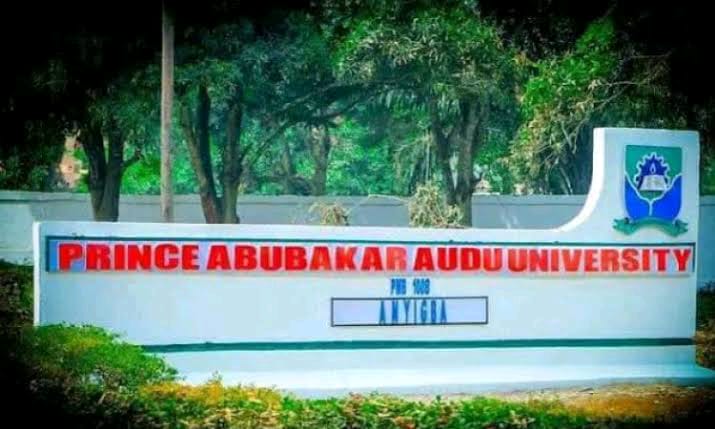
Kogi State University—today Prince Abubakar Audu University—was established under the administration of Prince Abubakar Audu.
Rather than discard an institution associated with the governor he defeated politically, the Idris administration invested substantially in expanding and strengthening it.
Published accounts credit his administration with substantial funding for infrastructure and accreditation, including the accreditation of 29 academic programmes.
The university benefited from lecture facilities, academic development, improved infrastructure and institutional support.
The larger lesson is important : a public university belongs to the people, not to the governor who established it.
Political rivalry should never become an excuse for destroying public investment.
The development of Kogi State University under Ibrahim Idris demonstrated what can happen when continuity triumphs over political ego.
*EDUCATION AS SOCIAL INVESTMENT.*
His educational interventions extended beyond the university.
Accounts of the period credit the administration with scholarship and bursary programmes for Kogi indigenes in tertiary institutions and payment of WAEC and NECO examination fees for eligible secondary – school students.
For wealthy households, an examination fee may appear insignificant. For struggling families, however, it can determine whether a child completes secondary education or has to postpone an examination.
The administration also invested in primary and secondary school infrastructure. Retrospective accounts attribute approximately 2,000 Primary-School classroom blocks to the period through SUBEB, alongside renovations of Secondary Schools and establishment of Special Science Secondary Schools in the State.
Kogi State Polytechnic, Lokoja, and the College of Education, Ankpa, were also among institutions that received attention during his administration.
These investments reflected a recognition that the future of a State ultimately depends upon the quality of its human capital.
*THE GREATER LOKOJA WATER PROJECT.*
Perhaps one of the most recognizable infrastructure legacies associated with the Idris administration is the Greater Lokoja Water Supply Project.
For decades, residents of Lokoja confronted the paradox of living close to the Rivers Niger and Benue while struggling for reliable potable water.
The Greater Lokoja Water Works sought to change that reality.
Independent research on Nigeria’s water utilities records that the Greater Lokoja Waterworks was established in 2011 under the Ibrahim Idris government. Other technical accounts record that the project was commissioned on November 28, 2011 by President Goodluck Ebele Jonathan.
The significance of that project cannot be measured only in pipes, treatment plants and reservoirs.
*Water is life.*
A functioning public water system affects health, sanitation, household expenditure, business productivity and the dignity of everyday living. He also provided numerous borehole Water Supply Project across the State through the MDG Office.
*INFRASTRUCTURE AND THE CHANGING FACE OF LOKOJA.*
The Ibrahim Idris years also witnessed substantial infrastructure development.
Projects associated with his administration in published accounts include the Lokoja International Market, Confluence Stadium, State Secretariat Phase II, housing estates and the Kogi State Specialist Hospital, Kogi State Reference and Diagnostic Center, Lokoja,
Housing development became another visible component of the period. Contemporary retrospective accounts attribute about 1,500 housing units in Lokoja , the 20 Owner Occupier Housing Units across the state’s 21 local government areas to his administration; the State House of Assembly Members Quarters at Lokoja; Official Residences for the Deputy Governor, Chief Justice of the State, President, Kogi State customary Courts, The Grand Khadi, The New Governor’s Office Complex in government house, State High Courts Complex buildings across the State, State Ministries Headquarters buildings across Lokoja, etc.
His government also invested in road construction and rehabilitation across the State. Accounts of the administration specifically identify work on the Lokoja–Ajaokuta road and road projects connecting communities across the state, the Idah bypass road , Ankpa-Ofugo-Ibado-Abejukolo-Ife – Bagana Road (Although in terrible condition today), Ayangba – Iyale – Abejukolo-Ife Road, Ibado-Icheke Road, Constructed Roads networks in Kogi West and Central Zones ; dualization of the major road in each of the 21 LGAs Headquarters etc.
Through programmes associated with rural development, boreholes, electrification and community infrastructure were extended into communities outside Lokoja.
This mattered greatly because development must not terminate at the state capital.
*HEALTHCARE DEVELOPMENT.*
The Kogi State Specialist Hospital, Lokoja, remains among the projects prominently associated with the Idris administration.
During his governorship, Idris himself described the administration’s investment in the Specialist Hospital, including recruitment of medical professionals and acquisition of medical equipment.
Healthcare infrastructure was complemented by interventions elsewhere in the state.
For a largely rural population, bringing functional healthcare closer to communities is not merely a social programme; it can mean the difference between treatment and preventable death.
*TRADITIONAL INSTITUTIONS AND CULTURAL AUTHORITY.*
H.E. Ibrahim Idris also recognized the place of traditional institutions in Kogi society.
Traditional rulers remain important custodians of history, culture and community stability. His administration undertook reviews affecting traditional institutions, and accounts from the period and thereafter document the grading or upgrading of stools during his administration.
Supporters of his administration also credit it with improving stipends and mobility for traditional rulers.
Whatever the changing Constitutional role of Traditional Institutions in modern Nigeria, their grassroots influence remains undeniable.
*A BRIDGE BETWEEN KOGI AND THE FEDERATION.*
His years as Governor coincided with a period when Kogi State sought greater representation and recognition within the federal structure.
One enduring symbol of the state’s expanding educational profile is the Federal University Lokoja, one of the federal universities established during the Goodluck Jonathan administration.
Interestingly, the Federal University Lokoja today has an administrative building named the Alhaji Ibrahim Idris Building, a recognition that the university itself describes within a broader programme honouring individuals for service, philanthropy and contributions to its development.
Throughout his political career, Idris also cultivated relationships across Nigeria’s regions, reflecting the experience of a man whose business and personal life had taken him through different parts of the country long before he became Governor. He got Federal and the Ruling Political Party’s (PDP) Appointments for many Kogi People – Ministerial and Head of Agencies appointments, Ambassador slot , the Ruling Party’s Chairman (PDP) then was elected from Kogi State during his tenure as Governor etc.
*EMPOWERING WOMEN AND YOUNG PEOPLE* .
Another important dimension of the Idris political philosophy was empowerment.
His administration supported youth and women through appointments, skills initiatives and economic programmes. Beyond formal government programmes, his personal political network became an avenue through which many younger politicians were introduced to public service.
*Leadership must reproduce leadership.*
A leader who leaves office without developing another generation leaves an institutional vacuum behind.
Ibrahim Idris remained influential precisely because his political relationships did not terminate with his tenure.
*LIFE AFTER GOVERNMENT HOUSE.*
When he left office in 2012, he did not disappear from public life.
He remained active in the PDP and in Kogi politics.
His home continued to attract established politicians, aspiring leaders and citizens seeking counsel, reconciliation or assistance.
He became an elder statesman and political mentor—a man consulted when political tensions required mediation.
But perhaps more importantly, his philanthropy continued.
Published profiles document his support for both mosques and churches and describe continued charitable and community activities after leaving office.
That interfaith generosity deserves attention in a country where religion can sometimes become an instrument of division.
– A mosque does not diminish a church.
– A church does not diminish a mosque.
Humanity becomes stronger when people recognize the dignity of neighbours whose mode of worship may differ from their own.
*A FAMILY ACQUAINTED WITH GOD’S MERCY.*
There were also moments in Ibrahim Idris’s life that his family and admirers interpreted through the lens of divine mercy.
One of the most remarkable occurred in 2006.
Three of his daughters survived the ADC Airlines Flight 53 crash in Abuja. Contemporary retrospective accounts identify them among the very small number of survivors of the disaster.
The crash claimed more than 100 lives, including Sultan Muhammadu Maccido of Sokoto.
For a man of faith, such an experience inevitably reinforces the fragility of human existence and the mystery of providence.
*THE MAN BEHIND THE OFFICE.*
Political offices can sometimes hide the human being occupying them.
Behind the title “Governor” was a father, businessman, philanthropist, friend and community man.
Those who encountered Ibrahim Idris closely often remember qualities that government statistics cannot capture : his patience, tolerance, generosity, forgiveness, accessibility and willingness to listen.
– He could be accommodating where another politician might seek retaliation.
– He could forgive where another might preserve grievances.
– He could give another person a second opportunity.
These characteristics were not evidence of perfection. No human being possesses that distinction.
Every government makes mistakes. Every leader leaves some expectations unmet. Every long tenure attracts criticism, controversies and competing assessments. Ibrahim Idris’s administration was no exception.
Historical fairness therefore requires neither canonization nor condemnation. It requires that achievements be acknowledged, shortcomings examined and lessons preserved.
*FROM “IBRO” TO “BABA KOGI”.*
There is something remarkable about the political journey of Ibrahim Idris.
– He entered politics as an accomplished businessman.
– He defeated an incumbent governor.
– He governed for close to nine years.
– He left office but remained politically relevant.
And gradually the businessman popularly known as Ibro became, to many followers and associates, Baba Kogi.
*That transformation cannot be created by government decree.*
It emerged from years of relationships, patronage, mentorship, philanthropy, political influence and public service.
He became a political father to many, a mentor to emerging leaders, a mediator in political disagreements and an elder whose residence became a destination for political consultation.
*LEGACY IS BIGGER THAN CONCRETE.*
When political leaders die, attention naturally turns to physical projects.
– We remember roads.
– We remember hospitals.
– We remember universities.
– We remember water projects.
– We remember markets, stadiums, secretariats and housing estates.
But the greatest legacy of leadership may ultimately be found in people.
– It is found in the student whose WAEC fee was paid and who later became a professional.
– It is found in the university graduate whose programme obtained accreditation.
– It is found in the pensioner who received an entitlement.
– It is found in the civil servant whose salary sustained an extended family.
– It is found in the community that received electricity, a borehole, classroom or road.
– It is found in the young politician who received an opportunity to serve.
– It is found in the traditional ruler whose institution received recognition.
– It is found in the ordinary citizen who walked into Government House believing that the Governor would listen.
Buildings eventually deteriorate. Roads require reconstruction. Governments change.
*But a life positively affected can become a legacy across generations.*
*ADIEU, BABA KOGI.*
Death has finally done what elections, political controversies and the passage of time could not do : it has permanently removed Alhaji Ibrahim Idris from the physical political arena of Kogi State.
But death cannot erase history.
On September 20, 2026, Kogi State lost its longest-serving governor. Nigeria lost a former governor, businessman and elder statesman. His family lost a father and patriarch. His political associates lost a mentor. And many ordinary people who encountered his generosity lost the man they affectionately regarded as Baba Kogi.
His passing should also remind today’s leaders of an eternal truth :
Political power is temporary.
– The sirens eventually become silent.
– The convoys disappear.
– The security details leave.
– The titles become historical references.
– Government House receives another occupant.
What remains is the answer to a simple question :
What did you do with the opportunity God and the people gave you?
For His Excellency Alhaji Dr. Ibrahim Adejo Idris, CON, that answer will be debated, documented and assessed by history. But the physical projects associated with his administration, the institutions strengthened during his tenure and the many personal testimonies of lives he touched constitute an important part of that record.
Many people perhaps appreciate leaders differently after they are gone. Death has a way of separating temporary political disagreements from enduring human relationships.
Today, therefore, as we mourn H.E. Ibrahim Idris, we should also reflect upon his journey—from businessman to Governor; from Governor to elder statesman; from political leader to mentor; from Ibro to Baba Kogi.
– He came.
– He worked.
– He succeeded.
– He served.
– He gave.
– He influenced.
– He mentored.
And now, he has answered the final call that awaits every human being.
May Almighty God forgive his shortcomings, accept his good deeds, grant him eternal rest and admit him into Aljannatul Firdaus.
Let God continue to comfort the family, friends, political associates and the entire people of Kogi State.
And may those who currently occupy positions of authority understand the lesson written across his journey:
We do not own public offices. We merely occupy them for a season. What we do with that season becomes our testimony before history—and ultimately before God.
Adieu, His Excellency Alhaji Dr. Ibrahim Adejo Idris, CON.
Adieu, Ibro.
Adieu, Baba Kogi.
Your earthly journey has ended, but the debate, memories and physical footprints of your years of service remain part of the continuing story of Kogi State.
Rest in peace, Baba Kogi.
By Jerome Aduojo Agi, Ph.D. Your Political Son and Mentee.