






By Atabor Julius
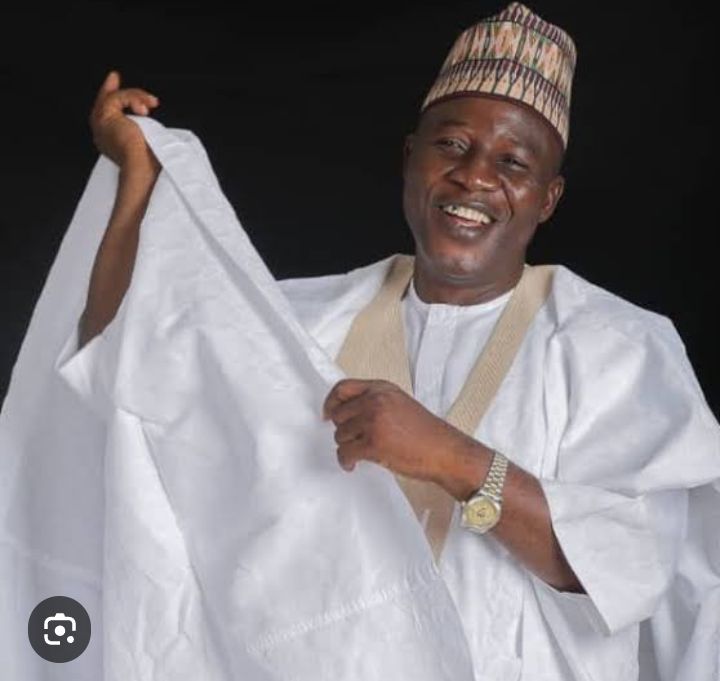
Like him or not, Hon. Abdullahi Ibrahim Alih, popularly known as Halims, is a man of his own. No two individuals are exactly alike. We are uniquely created by Almighty God for purposes best known to Him. God, the master architect, fashioned humanity in diverse forms, giving each person a distinct physiology, temperament, mindset and disposition.
Even conjoined twins, despite their similarities in appearance and, sometimes, conduct, are not entirely the same. These differences, when poorly understood or interpreted through the lens of prejudice, can lead to misconceptions, misrepresentation and, ultimately, resentment.
To understand an individual fairly, therefore, requires more than a casual observation. It demands a careful study of character, sustained interaction and an appreciation of the circumstances that shape human behaviour. Judging a person solely by outward appearances may not reveal the entirety of their character, especially because human beings are constantly influenced by changing circumstances.
As the renowned communication theorist Marshall McLuhan suggested through the metaphor of a flowing river, what we encounter at one moment may not be exactly what we encounter at another. Human beings, like rivers, are shaped by the continuous flow of experiences and circumstances.
Every individual deserves to be understood within this context, whether in politics or any other vocation. Fair judgement requires us to look beyond sentiments and consider a person’s character, intentions, conduct and contributions.
With another election cycle approaching, we must be particularly discerning. Political actors will increasingly deploy various strategies to win the hearts and votes of the electorate. Some will suddenly become philanthropists, eloquent public speakers and champions of promises they may have little intention or capacity to fulfil.
The conduct of some politicians during election season resembles that of a man who expends extraordinary energy courting a woman he desires, only to abandon her shortly after achieving his objective. Similarly, some politicians become exceptionally humble, generous, attentive and accessible when they need the people’s votes. Once the election is over, their enthusiasm for the electorate often disappears.
Their temporary affection is not necessarily driven by love for the people but by the desire to secure political power.
I recall a humorous question I posed about four years ago concerning a politician seeking office. I asked whether, after winning the election, he would still answer the telephone calls of the friend who had supported him. The question captured a familiar experience in our political environment: relationships that flourish during campaigns but become distant once political objectives have been achieved.
This is the transactional nature of politics practised by some public office seekers. Their engagement with the electorate becomes a bargain rather than a lasting commitment to public service.
I once read an account of a politician who allegedly constructed boreholes, installed solar-powered streetlights and built school facilities in some communities. After losing his re-election bid, he reportedly returned to dismantle the streetlights, fill the boreholes and remove the roofs of schools he had helped construct, telling the villagers to approach the candidate they had elected to repair the damage.
If accurately reported, such conduct represents the most disturbing expression of transactional politics: treating public infrastructure as personal property and development as a favour that can be withdrawn when political support is lost.
Thankfully, not every politician belongs to this category. There are public servants whose commitment to their people transcends election cycles. In my assessment, Hon. Abdullahi Ibrahim Alih, popularly known as Halims, belongs to this group.
Halims: A man of consistency and conviction
Since entering politics several years ago, Halims has, in my estimation, remained remarkably consistent in his disposition. He has not needed to assume another person’s identity to establish his political relevance. He has maintained his own style, values and approach to public service.
He values his words and treats commitments with seriousness. He is measured in his speech, restrained in his promises and not given to excessive rhetoric. His humility, empathy, courage and charisma are qualities that, to his admirers, distinguish him from many of his contemporaries.
Whether in the company of his peers or among individuals of greater political standing, he carries himself with dignity and self-respect.
With all modesty, I consider Hon. Abdullahi Ibrahim Alih Halims a political asset to the people of Kogi East. Among those elected to represent the district and those seeking its mandate in the forthcoming National Assembly elections, he stands out, in my view, for his refusal to compromise his convictions merely to secure political favour.
The recent political manoeuvres in our state have exposed the willingness of some actors to subordinate collective interests to personal ambition. The spectacle of political office seekers allegedly prostrating before powerful interests from opposing political camps in pursuit of personal advantage has generated understandable concerns about the dignity of our political representation.
Against this backdrop, Halims’ perceived independence and resolve deserve recognition.
Throughout these political developments, the distinguished lawmaker and Deputy Majority Leader of the House of Representatives has remained focused on his legislative responsibilities. He is widely regarded as the first representative from Kogi East to occupy that position, a milestone that carries significance for the district.
His political journey also demonstrates that legislative ambition does not necessarily require constant political theatrics. His emergence for a third term on the platform of the All Progressives Congress (APC), despite the contestations surrounding other political figures, reflects the confidence his party appears to place in his electoral value and legislative experience.
Halims is not a newcomer to the political arena. He understands its dynamics and has developed a working relationship with the people he represents. Beyond political calculations, however, the central question remains whether he has discharged his mandate.
In my assessment, his legislative record provides grounds for his supporters to argue in favour of continuity. He has sponsored and supported bills and motions directed at addressing public concerns, with some receiving substantial support from his colleagues. Lawmaking remains the primary responsibility of a legislator, and the quality of that work should form a central part of any assessment of his performance.
Rather than burden readers with an exhaustive catalogue of his legislative activities, I encourage interested citizens to examine his record, review his bills and motions, and independently assess his contributions to the House of Representatives.
Another issue that deserves clarification is the place of constituency projects in Nigeria’s democratic system.
Under the principle of separation of powers, the legislature makes laws and exercises oversight, the executive implements policies and administers government, while the judiciary interprets the law and adjudicates disputes. Each arm has distinct responsibilities, although effective governance requires cooperation among them.
Constituency projects, as practised in Nigeria, have evolved within this institutional arrangement as a means of directing development towards specific community needs that might otherwise receive insufficient attention.
Given Nigeria’s vast geography, large population and diverse development challenges, legislators can help identify neglected communities and advocate for projects that address local priorities. These may include roads, water supply, schools, healthcare facilities and other essential infrastructure.
However, legislators do not independently control the entire implementation process. Projects must pass through applicable budgetary and administrative procedures, while their execution rests largely with the relevant executive institutions.
Consequently, constituency projects should not be confused with the primary constitutional responsibilities of lawmakers. Nor should every intervention by a legislator be interpreted as an exclusive personal achievement, since public projects involve institutional processes and public resources.
Nevertheless, legislators can make meaningful contributions by identifying genuine needs, advocating for their inclusion in budgets, monitoring implementation and ensuring that underserved communities receive attention.
Some also support vulnerable constituents through personal or philanthropic interventions. Although such assistance may be commendable, it should be distinguished from constitutionally assigned legislative duties.
In both legislative representation and community engagement, Halims has, in my view, established a record worthy of examination and recognition.
I was particularly interested in his recent appearance on Urah TV, where he responded to questions about his stewardship and highlighted projects undertaken in parts of Omala Local Government Area.
His references to communities where projects had been located drew my attention to the geographical spread of development interventions within the local government. Some of the villages mentioned were unfamiliar to me, despite being an indigene of Omala. Their mention underscored the importance of paying attention to communities that may not ordinarily feature prominently in public discussions.
Of course, no representative can satisfy every demand or address every development challenge within a constituency. The needs are numerous, resources are limited, and expectations are often enormous.
The existence of unmet needs should therefore prompt constructive scrutiny rather than an automatic dismissal of every achievement. We must acknowledge what has been accomplished while identifying what remains to be done.
Accountability and appreciation are not mutually exclusive. A representative can be commended for measurable contributions while still being expected to improve.
The debate surrounding Halims’ third-term ambition should also be approached with reason rather than sentiment.
There is nothing inherently wrong with a legislator seeking another term where the law permits it and the electorate remains willing to renew the mandate. Indeed, legislative experience can be valuable, particularly in a system where institutional knowledge, procedural competence and established relationships often influence a lawmaker’s effectiveness.
Halims is entitled to seek re-election, just as the electorate is entitled to examine his record and decide whether he deserves another opportunity.
A third term should neither be granted automatically nor rejected simply because a politician has previously served two terms. The more relevant questions concern performance, integrity, competence, responsiveness and the potential value of continued service.
Several Nigerian and international political figures have served multiple terms in their respective legislatures, demonstrating that legislative longevity is not unusual in democratic systems.
In Nigeria, former Senate President Ahmad Lawan has served in the National Assembly since 1999, while Senator Ali Ndume entered the National Assembly in 2003. Speaker of the House of Representatives Tajudeen Abbas began his legislative career in 2011. Other experienced lawmakers have also served multiple terms, building institutional knowledge over time.
Former Speaker of the House of Representatives Aminu Tambuwal served in the National Assembly before becoming governor of Sokoto State. Former Senate President David Mark is another example of a politician whose long legislative career helped establish his prominence in national politics.
These examples demonstrate that legislative experience can provide a foundation for broader public service. They do not, however, mean that longevity alone guarantees good representation. Performance and accountability must remain the decisive considerations.
International experience also offers useful examples of political families whose members have served across generations.
The Bush family produced two American presidents, George H. W. Bush and George W. Bush, alongside other prominent political figures, including former Florida Governor Jeb Bush.
The Kennedy family has maintained a significant presence in American public life for decades, including President John F. Kennedy, Senator Edward Kennedy and other members who served in elected office.
The Taft family produced President William Howard Taft, who also served as Chief Justice of the United States Supreme Court, and Senator Robert A. Taft. The Adams family likewise produced two presidents: John Adams and his son, John Quincy Adams.
The Dingell family established a remarkable record of consecutive congressional service through John Dingell Sr. and his son, John D. Dingell Jr. The Paul family provides another example of political succession, with former Representative Ron Paul and his son, Senator Rand Paul, serving in the United States Congress.
These examples illustrate how political experience, public networks and institutional knowledge can sometimes pass from one generation to another. They also show that repeated service in a legislature is a recognised feature of democratic politics.
Nevertheless, political dynasties have their critics, particularly where family connections appear to restrict competition or create privileged access to power. Their experiences should therefore be studied critically rather than copied unconditionally.
The lesson for Kogi East is not that any politician should remain in office indefinitely. Rather, it is that experience should not be discarded merely because it has accumulated over several terms. Where a representative has demonstrated competence, integrity and a commitment to public service, the electorate should be free to consider the benefits of continuity.
For Kogi East, the question before us is whether continuity in the House of Representatives would serve the district’s long-term interests.
My position is that Halims deserves serious consideration for another term based on his legislative experience, political standing and record of representation. His position as Deputy Majority Leader provides an opportunity to strengthen the voice of Kogi East in national legislative deliberations.
An experienced lawmaker may be better positioned to understand legislative procedures, build productive relationships with colleagues and navigate the processes through which bills, motions and constituency priorities receive attention. Such advantages, however, must be matched by a willingness to remain accessible, transparent and responsive to constituents.
As the forthcoming National Assembly election approaches, the people of Kogi East should assess every candidate on the strength of their record, ideas, integrity and capacity to represent the district effectively.
In my considered opinion, Halims has made a case for continuity. His supporters have grounds to argue that his experience and legislative position can be further harnessed for the benefit of Kogi East.
At the same time, he must remain conscious that every renewed mandate is a fresh obligation to the electorate. The people’s confidence is not a permanent entitlement; it is a responsibility that must be continually earned.
Ultimately, democratic representation is strengthened when voters make informed choices, reward credible performance and demand accountability from those they elect.
I therefore believe that Hon. Abdullahi Ibrahim Alih Halims deserves the opportunity to present his record before the people and seek their renewed mandate. If the electorate is satisfied with his performance, continuity should be viewed as a legitimate democratic choice rather than a source of unnecessary controversy.
I come in peace.
Atabor Julius is a journalist and political analyst who writes from Lokoja, Kogi State. He can be reached at [email protected].