DEKINA/BASSA 2027: A FOUR-LEG Race with two frons running structures.
An Assessment of the APC, SDP, ADC and PDP Contest
By
Ajuma Adejo
Anyigba, Kogi State
The 2027 House of Representatives election for Dekina/Bassa Federal Constituency is gradually taking the shape of a four-legged political race, with the All Progressives Congress (APC), Social Democratic Party (SDP), African Democratic Congress (ADC) and Peoples Democratic Party (PDP) emerging as the principal political structures deserving close attention.
Although other candidates are on the ballot and retain every constitutional right to contest and mobilise support, the present political landscape suggests that the contest is likely to revolve significantly around these four parties. Within that four-party field, however, APC and SDP currently stand out as the two most prominent structures, for different reasons.
The APC enters the race with the advantages of incumbency, an established party organisation and control of the Kogi State government. Its candidate, Hon. Paul Haruna Gowon, is the sitting representative and has previous legislative experience, having served in the Kogi State House of Assembly before winning the federal constituency seat in 2023. The APC formally selected Gowon as its candidate at its May 2026 primary.
The SDP enters with a different but significant asset: recent electoral evidence of substantial support within the constituency. In the 2023 Kogi governorship election, SDP candidate Murtala Ajaka recorded 47,480 votes in Dekina, compared with 9,174 for APC, while in Bassa APC recorded 9,515 votes against SDP’s 7,543.
These figures cannot be mechanically transferred to a 2027 House of Representatives election. The candidates are different, the nature of the election is different, alliances may change, and voter behaviour can vary from one election to another. Nevertheless, the results demonstrate that SDP possesses a substantial recent electoral footprint in Dekina/Bassa.
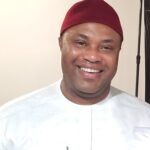
This makes Umoru Atabo Joseph of the SDP an important candidate in the contest. His challenge will be to consolidate the party’s previous support, particularly in Dekina, while expanding its reach in Bassa. His private-sector background and political relationships provide an additional personal dimension to the SDP campaign.
The APC, meanwhile, will seek to defend and consolidate its established base, particularly in Bassa, while narrowing the substantial gap recorded against SDP in Dekina in 2023. The party’s principal candidate advantage is that Gowon is an incumbent with an existing constituency network and knowledge of the political terrain.
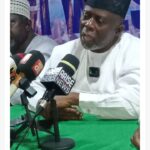
The PDP, represented by Hon. Benjamin Ikani Okolo, should not be overlooked. Okolo’s previous service as chairman of Dekina Local Government and former member of the House of Representatives gives him political recognition and legislative experience. His major challenge will be translating that personal political history into a sufficiently cohesive party structure capable of competing across both LGAs.
The ADC, represented by Jibril Sheik Ibrahim, also occupies an important position in the emerging race. Ibrahim has developed a recognisable political profile and has spoken on issues including employment, agriculture, youth development, women’s economic empowerment, infrastructure and education. ADC’s principal challenge is organisational: the party’s 2023 governorship performance in Dekina and Bassa was relatively modest, recording 421 and 448 votes respectively.
Thus, the four parties enter the contest with different political assets.
APC brings incumbency and an established governing-party structure. SDP brings a substantial recent electoral base and the opportunity to build on its strong 2023 performance. PDP brings historical political experience and the personal networks of its candidate. ADC brings an established candidate profile and the possibility of expanding its political footprint.
The geography of Dekina and Bassa makes the contest particularly interesting. The 2023 results revealed two distinctly different political patterns: SDP was dominant in Dekina, while APC recorded the highest vote in Bassa.
Consequently, the strategic challenge for both leading parties is clear. SDP must consolidate Dekina and make substantial inroads into Bassa; APC must consolidate Bassa while substantially improving its position in Dekina.
This is why the race can reasonably be described as a four-legged race with two leading structures.
The phrase does not mean that the outcome has been predetermined. Rather, it describes the present configuration of the political field. APC and SDP appear to have the most significant combination of recent electoral evidence, candidate visibility and existing political structures. PDP and ADC remain important competitors and could influence the distribution of votes, particularly if they succeed in consolidating their local networks and attracting support from voters dissatisfied with the larger parties.
Ultimately, however, elections are not decided simply by historical figures or political assumptions. They are determined by what candidates and parties are able to build between now and election day: organisation, unity, grassroots mobilisation, polling-unit structures, credible agents, community engagement and the ability to persuade voters.
For now, therefore, Dekina/Bassa can best be understood as a four-legged race involving APC, SDP, ADC and PDP, with APC and SDP occupying the most prominent positions in the current political conversation.
The central question as the campaign develops will be whether APC’s incumbency and established political machinery can withstand SDP’s demonstrated electoral strength and whether PDP and ADC can transform their respective political assets into a constituency-wide electoral force.