







How PDP, ADC, APC and NDC Are Shaping the Battle for the Federal Constituency
By Mohammed Adejo
Idah, Kogi State
The 2027 House of Representatives election for Idah/Igalamela-Odolu/Ibaji/Ofu Federal Constituency is emerging as one of the most politically intriguing contests in Kogi East.
The Independent National Electoral Commission’s final list contains twelve candidates for the constituency, but four names and four political structures stand out in the current political configuration: Zacharias Idris David of the Peoples Democratic Party (PDP), Idu Peter Yakubu of the African Democratic Congress (ADC), Uchola Ojogbane Omale of the All Progressives Congress (APC), and Ibrahim John Ocheje of the Nigeria Democratic Congress (NDC).
While all four candidates have the constitutional right and political opportunity to compete for the votes of the electorate, the emerging contest appears particularly concentrated around Zacharias Idris David and Idu Peter Yakubu, with Uchola Ojogbane Omale and Ibrahim John Ocheje capable of significantly affecting the distribution of votes.
The constituency therefore presents an interesting political configuration: a four-cornered contest in which two candidates currently command the greatest attention.
ZACHARIAS: INCUMBENCY, PERSONAL NETWORK AND GRASSROOTS POLITICS
The first major factor is Hon. Zacharias Idris David, the incumbent representative and candidate of the PDP.
Zacharias is not entering the contest as an aspirant seeking to introduce himself to the electorate. He is an incumbent who has already established relationships across the four local government areas and has previously been elected twice to the House of Representatives under the APC platform.
His political history gives him something that most challengers have to build from the beginning: an existing constituency network.
But incumbency alone does not explain the attention surrounding his candidacy.
One of the features associated with Zacharias’ political style is his reported emphasis on reaching people at the grassroots, particularly women, young people, less-privileged citizens and vulnerable groups. His supporters point to empowerment interventions, personal assistance and youth-oriented support as important components of his relationship with the constituency.
For a federal constituency as geographically diverse as Idah/Igalamela-Odolu/Ibaji/Ofu, personal relationships can be politically significant.
Politics at this level is not conducted only through party offices. It is also conducted through families, community leaders, youth organisations, women groups, religious networks, professional associations and long-standing interpersonal relationships.
Zacharias’ relationship with young people is another important component of his political profile. His supporters have associated him with empowerment and support initiatives directed at youths within the constituency. These relationships potentially provide him with a grassroots network beyond the formal structure of his political party.
There is also a geographical consideration.
Zacharias is from Ofu Local Government Area, and there is presently no comparably prominent contender from Ofu on the ballot who is positioned to create a direct local contest against him. That circumstance may allow him to seek to consolidate his home-LGA support while concentrating his campaign on the other three LGAs.
His current political position is therefore built around three interconnected assets:
incumbency, personal relationships and an established grassroots network.
These factors make Zacharias a candidate whose political structure cannot easily be dismissed.
IDU PETER YAKUBU: THE ADC CHALLENGE FROM IDAH
The most interesting alternative to the incumbent is Idu Peter Yakubu of the ADC, whose candidacy has generated increasing political attention across the constituency.
Idu Peter Yakubu’s strongest immediate opportunity appears to be in Idah Local Government Area.
If the emerging sentiment in Idah translates into an organised electoral movement behind the ADC candidate, it could create a significant bloc of votes from the largest political centres within the constituency. The crucial question, however, is whether that support can be extended beyond Idah.
The ADC candidate therefore faces a strategic equation.
A strong performance in Idah would provide an important foundation, but the constituency is not Idah alone. To transform Idah-based support into a constituency-wide challenge, Idu Peter Yakubu would need to establish substantial networks in Igalamela-Odolu, Ibaji and Ofu.
This is particularly important because the PDP incumbent already has an established presence across the constituency.
The ADC campaign’s strongest opportunity is therefore not simply to win support in Idah, but to combine that support with meaningful gains in the other three LGAs.
If that happens, the political configuration of the election could become considerably more competitive.
UCHOLA OJOGBANE OMALE: THE APC MACHINE
The APC candidate, Uchola Ojogbane Omale, enters the race with perhaps the most recognisable institutional structure outside the incumbent’s personal network.
He is the candidate of the governing party in Kogi State and is positioned to benefit from the APC’s established party machinery and the support of state-level political structures.
Uchola Ojogbane Omale emerged as the APC candidate at the party’s 2026 primary. Reports of the primary indicate that he secured 12,032 votes, while incumbent Zacharias, who also participated in the APC primary before contesting on the PDP platform, recorded 1,954 votes.
His candidacy therefore represents more than an individual challenge. It represents the effort of the APC structure to retain the federal constituency.
The APC candidate is also publicly associated with the political establishment around Governor Ahmed Usman Ododo and the APC leadership in Kogi State. Reports from the period after the APC primary show party figures publicly pledging support for APC candidates, including Uchola.
The APC consequently possesses an important advantage: organisation.
The challenge, however, is that the same political association that gives the candidate access to a powerful party structure may also expose him to the political sentiments surrounding the state government and former political leadership.
More importantly, there is a serious geographical complication.
THE IBAJI EQUATION: UCHOLA AND IBRAHIM JOHN OCHEJE
Both Uchola Ojogbane Omale of APC and Ibrahim John Ocheje of NDC are from Ibaji.
That fact could become one of the most consequential dynamics in the election.
Ordinarily, having a strong candidate from one’s home LGA can provide a party with a substantial advantage. But where two politically recognised candidates from the same LGA contest against each other, the local vote can become divided.
Ibrahim John Ocheje is not simply a name appearing on the ballot. He has been involved in politics for some time and is understood within political circles as a familiar political actor in Ibaji.
Consequently, the APC cannot necessarily assume that its candidate’s Ibaji origin will translate into a consolidated Ibaji vote.
If Ibrahim John Ocheje succeeds in mobilising a substantial portion of the Ibaji electorate, the consequence would be a division of the very votes that the APC candidate would ordinarily seek to consolidate.
This could constitute a significant structural difficulty for the APC campaign.
It is therefore not enough to examine the APC candidate’s relationship with the state government and party machinery. The Ibaji vote itself must be examined as a separate political variable.
IBRAHIM JOHN OCHEJE AND THE NDC FACTOR
The NDC candidate has an opportunity that should not be underestimated.
Ibrahim John Ocheje’s political history and familiarity within Ibaji provide him with a potential local network, while the NDC platform gives him an independent political identity.
His most important contribution to the contest may therefore not be measured simply by whether he becomes the dominant candidate in the entire constituency.
His candidacy could have a significant effect on how the Ibaji vote is distributed.
That is particularly important for the APC.
If the APC candidate and the NDC candidate divide the Ibaji electorate between themselves, the APC’s organisational advantage could be reduced in an important part of the constituency.
Thus, although the election has increasingly attracted attention around PDP and ADC, NDC remains a candidate to watch because of the possible consequences of its candidate’s presence in Ibaji.
WHY ADC AND PDP ARE ATTRACTING THE GREATEST ATTENTION
The emerging political configuration can therefore be understood through two different forms of political strength.
Zacharias Idris David brings incumbency, personal relationships, previous electoral experience and an established grassroots network.
Idu Peter Yakubu brings the ADC platform and the possibility of consolidating substantial support in Idah before expanding into the other three LGAs.
The two candidates therefore represent contrasting political strategies.
For Zacharias, the objective is essentially consolidation: protect the incumbent’s existing network, maintain his relationship with women and young people, preserve his support among less-privileged and vulnerable groups, and prevent challengers from converting localised support into a constituency-wide movement.
For Idu Peter Yakubu, the opportunity is expansion: convert growing support in Idah into a broader four-LGA coalition.
The other two candidates can substantially affect this equation.
Uchola Ojogbane Omale has the APC structure and the backing associated with the governing party.
Ibrahim John Ocheje has the potential to divide the Ibaji vote and thereby alter the APC candidate’s arithmetic.
This is why the contest cannot be analysed simply by asking which candidate has the strongest political party.
The more important question is how the votes will be distributed geographically across Idah, Ibaji, Igalamela-Odolu and Ofu.
THE FOUR-LGA EQUATION
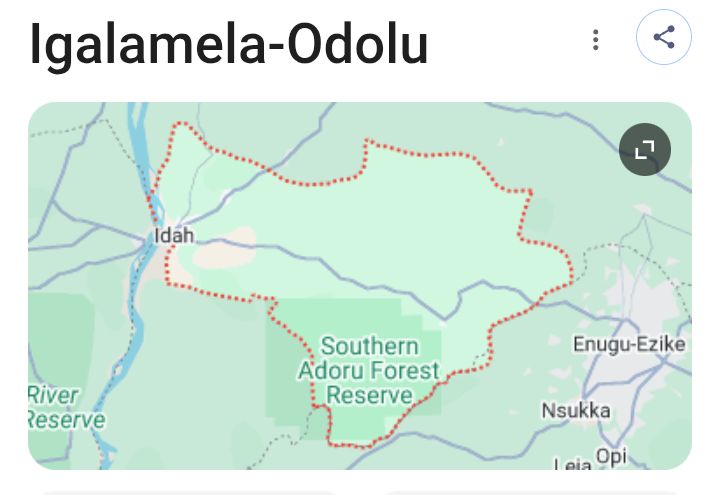
The geography of the constituency may ultimately be as important as the political personalities.
Idah could become the principal foundation of the ADC campaign if the reported movement toward Idu Peter Yakubu develops into a consolidated voting bloc.
Ofu provides Zacharias with an important home-LGA base and personal political relationships.
Ibaji presents the most complicated equation because both Uchola Ojogbane Omale and Ibrahim John Uche are from the LGA.
Igalamela-Odolu could consequently become one of the decisive battlegrounds because neither of the principal candidates can afford to neglect it.
This creates a four-part political chessboard in which no candidate can safely assume that strength in one LGA will automatically translate into victory across the constituency.
THE APC, PDP, ADC AND NDC FOUR-WAY DYNAMIC
The four principal candidates therefore bring different political assets to the election.
Zacharias Idris David — PDP: incumbency, previous legislative experience, two previous elections under the APC platform, extensive personal relationships, youth connections and grassroots support built through empowerment and assistance.
Idu Peter Yakubu — ADC: growing political visibility, a potentially strong Idah base and the opportunity to build a broader coalition across the four LGAs.
Uchola Ojogbane Omale — APC: the governing-party platform, established APC structures and access to state-level political machinery.
Ibrahim John Uche — NDC: political experience, familiarity within Ibaji and the potential to divide the Ibaji vote, particularly among voters who might otherwise gravitate toward the APC candidate.
These are four different political assets.
None should be ignored.
CONCLUSION: A TWO-HORSE CONTEST WITH FOUR SERIOUS PLAYERS
The 2027 Idah/Igalamela-Odolu/Ibaji/Ofu Federal Constituency election is therefore shaping up as a four-cornered contest with a particularly intense PDP–ADC dimension.
The APC and NDC candidates must be watched closely because their combined presence in Ibaji could significantly influence the overall arithmetic.
Uchola Ojogbane Omale has the advantage of the APC’s established political machinery and state-level support. Ibrahim John Uche brings his own political network and local familiarity in Ibaji. Together, however, their candidacies introduce the possibility of dividing the Ibaji vote.
At the centre of the emerging contest are Zacharias Idris David of the PDP and Idu Peter Yakubu of the ADC.
Zacharias enters with the institutional and personal assets of an incumbent: previous legislative experience, an established constituency network, strong interpersonal relationships and a reputation among supporters for reaching women, young people and vulnerable members of the constituency.
Idu Peter Yakubu, meanwhile, represents an ADC campaign that appears to be attracting increasing attention, particularly in Idah. If that support becomes sufficiently consolidated and is combined with meaningful penetration into Igalamela-Odolu, Ibaji and Ofu, the ADC could transform its Idah strength into a broader constituency-wide challenge.
The most consequential question may therefore not be simply who has the strongest party, but who can assemble the broadest coalition across the four LGAs.
The APC has the machinery.
The NDC has the potential to alter the Ibaji equation.
The PDP has an incumbent with an established personal and grassroots network.
The ADC has an emerging opportunity to consolidate Idah and expand beyond it.
Consequently, the constituency should be watched as a four-player contest in which Zacharias Idris David and Idu Peter Yakubu currently occupy the central positions in the political narrative, while Uchola Ojogbane Omale and Ibrahim John Uche remain formidable candidates capable of reshaping the electoral arithmetic.
The final outcome will depend on developments between now and election day—including party cohesion, local alliances, candidate mobilisation, voter turnout, the distribution of support across the four LGAs and the ability of each campaign to translate political goodwill into organised polling-unit strength.
For now, the defining question is whether Zacharias’ established constituency network can withstand the emerging ADC challenge from Idu Peter Yakubu, while APC and NDC compete for the political space in Ibaji.
That is what makes Idah/Igalamela-Odolu/Ibaji/Ofu one of the most closely watched House of Representatives contests in Kogi East.