





An Assessment of the APC, ADC, SDP, PDP and NDC Contest
By Abdul Adama
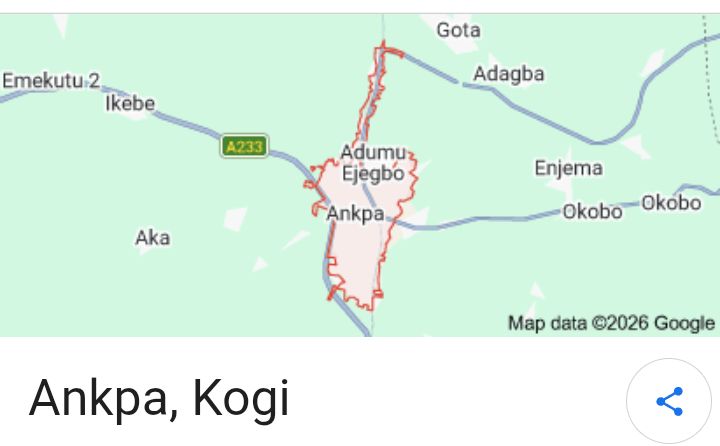
Ankpa, Kogi State
Introduction
The 2027 House of Representatives election for Ankpa/Omala/Olamaboro Federal Constituency is developing around two particularly visible political structures: the All Progressives Congress (APC) and the African Democratic Congress (ADC). While the final candidate list contains 12 candidates, the political conversation is increasingly focused on the capacity of the incumbent APC structure and the emerging opposition structure represented by the ADC. The SDP, PDP and NDC nevertheless remain relevant competitors whose presence could influence the distribution of votes across the constituency.
At the centre of the APC structure is Rt. Hon. Abdullahi Ibrahim Ali Halims, the incumbent representative of the constituency and the APC candidate for 2027. Contemporary reports identify him as the Deputy Leader of the House of Representatives and report that he secured the APC ticket for another term after the party’s nomination process.
Halims consequently enters the election with the advantages associated with incumbency: legislative experience, visibility, an established political network and the organisational machinery of the ruling party. His political position within the constituency also provides an existing platform from which to engage voters across Ankpa, Omala and Olamaboro.
The central question for APC is therefore whether its established structure can translate incumbency, legislative experience and party organisation into continued constituency-wide support.
The ADC Factor: Joshua Adejoh
The emergence of Joshua Adejoh as the ADC candidate introduces a different political proposition. The ADC is formally represented on the final candidate list by Adejoh, making him one of the principal opposition figures in the constituency’s 2027 contest.
The significance of the ADC candidacy lies in the broader political environment in which the party is contesting the election. The ADC is seeking to establish itself as a significant opposition platform nationally, while its candidates in individual constituencies must translate that wider political identity into local organisation and voter support. Recent national developments have also seen the ADC field candidates across several states, reinforcing its effort to expand its electoral presence.
For Joshua Adejoh, therefore, the principal challenge is organisational: whether the ADC can build a sufficiently coherent structure across Ankpa, Omala and Olamaboro, connect with voters dissatisfied with existing political arrangements and convert that sentiment into an organised electoral campaign.
This is particularly important in a constituency where an incumbent has already established a substantial political network. An opposition campaign must therefore compete not only through candidate visibility but also through ward organisation, polling-unit presence, mobilisation, agents and sustained engagement with communities.
Ankpa, Omala and Olamaboro: Three Political Arenas
The constituency should not be treated as one politically homogeneous territory. Ankpa, Omala and Olamaboro have distinct political histories, personalities, community interests and local networks.
For APC, the objective is to maintain a sufficiently cohesive structure across all three LGAs and convert the advantages of incumbency into broad electoral support.
For ADC, the opportunity lies in building an alternative coalition that reaches beyond particular communities or individual political networks. The party’s strength will ultimately depend on whether Joshua Adejoh can establish a visible presence across the three LGAs rather than allowing the campaign to become concentrated in one geographical area.
This makes the 2027 contest essentially a struggle between an established political structure and an opposition structure seeking to expand its reach.
The Wider Five-Party Contest
Although APC and ADC currently provide the clearest framework for analysing the principal political confrontation, the election is not formally a two-party contest.
The final list includes Abubakar Usman Yahaya of the PDP, Enenche Yakubu Yusuf of the SDP and Amodu Emmanuel Adejo of the NDC, alongside candidates from Accord, AA, APP, APM, NDP, YPP and ZLP.
These candidates cannot simply be written out of the electoral equation. A candidate does not necessarily need to dominate the political conversation to influence the final result. A strong showing by another party in particular wards or communities can alter the distribution of votes between the principal contenders.
The presence of Enenche Yakubu Yusuf of the SDP, Abubakar Usman Yahaya of the PDP and Amodu Emmanuel Adejo of the NDC therefore adds an important layer to the contest. Their ability to mobilise supporters could determine how fragmented or concentrated the vote becomes.
What the APC Must Defend
For Abdullahi Ibrahim Ali, the principal political asset is an established structure built around incumbency and legislative experience. His campaign can point to continuity, familiarity with federal legislative processes and the institutional relationships associated with his position in the House.
But the same incumbency also places his record directly before the electorate. A third-term campaign necessarily invites voters to evaluate what has been achieved during the incumbent’s previous terms and what additional representation would mean for the constituency.
The APC’s challenge is consequently to maintain organisational cohesion while demonstrating continued relevance across Ankpa, Omala and Olamaboro.
What the ADC Must Build
For Joshua Adejoh, the challenge is fundamentally one of expansion and consolidation.
The ADC must establish whether its political structure can move beyond opposition sentiment and develop the ward-level organisation necessary for a competitive House of Representatives election. That means building relationships across the three LGAs, identifying local issues, sustaining grassroots engagement and ensuring effective representation at polling-unit level.
The opportunity for the ADC is that opposition campaigns can attract voters seeking an alternative political direction. But that opportunity becomes electorally meaningful only when it is converted into organisation, mobilisation and turnout.
Conclusion
The Ankpa/Omala/Olamaboro 2027 election can therefore be examined through the lens of a two-structure contest within a broader multi-party field.
Abdullahi Ibrahim Ali of the APC represents the established incumbent structure, supported by incumbency, legislative experience and an existing party organisation. Joshua Adejoh of the ADC represents an opposition structure seeking to expand its presence and build a constituency-wide alternative.
Behind these two principal structures are Enenche Yakubu Yusuf of the SDP, Abubakar Usman Yahaya of the PDP and Amodu Emmanuel Adejo of the NDC, together with candidates from seven other parties. Their individual performances could affect the overall vote distribution and therefore remain relevant to any serious assessment of the election.
The emerging political picture is consequently not a predetermined two-party outcome. Rather, it is a principal APC–ADC contest embedded within a wider Candidate electoral field. The determining variables as the campaign develops will include the strength of ward and polling-unit structures, candidate visibility, local alliances, voter mobilisation, campaign issues, turnout and the distribution of support across Ankpa, Omala and Olamaboro.
The central political question is therefore straightforward: can Joshua Adejoh and the ADC build an opposition structure sufficiently broad to challenge the established machinery of Abdullahi Ibrahim Ali and the APC? The answer will ultimately be provided not by campaign rhetoric, but by the electorate on election day.